






























 Whatsapp
 Download Catalogue
Fuse Lockout Devices


Browse Complete Product Line Below


Showing 9–16 of 22 results
-


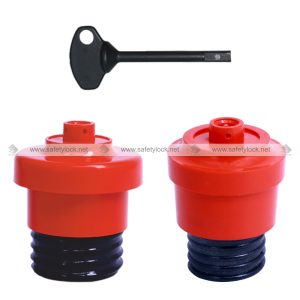
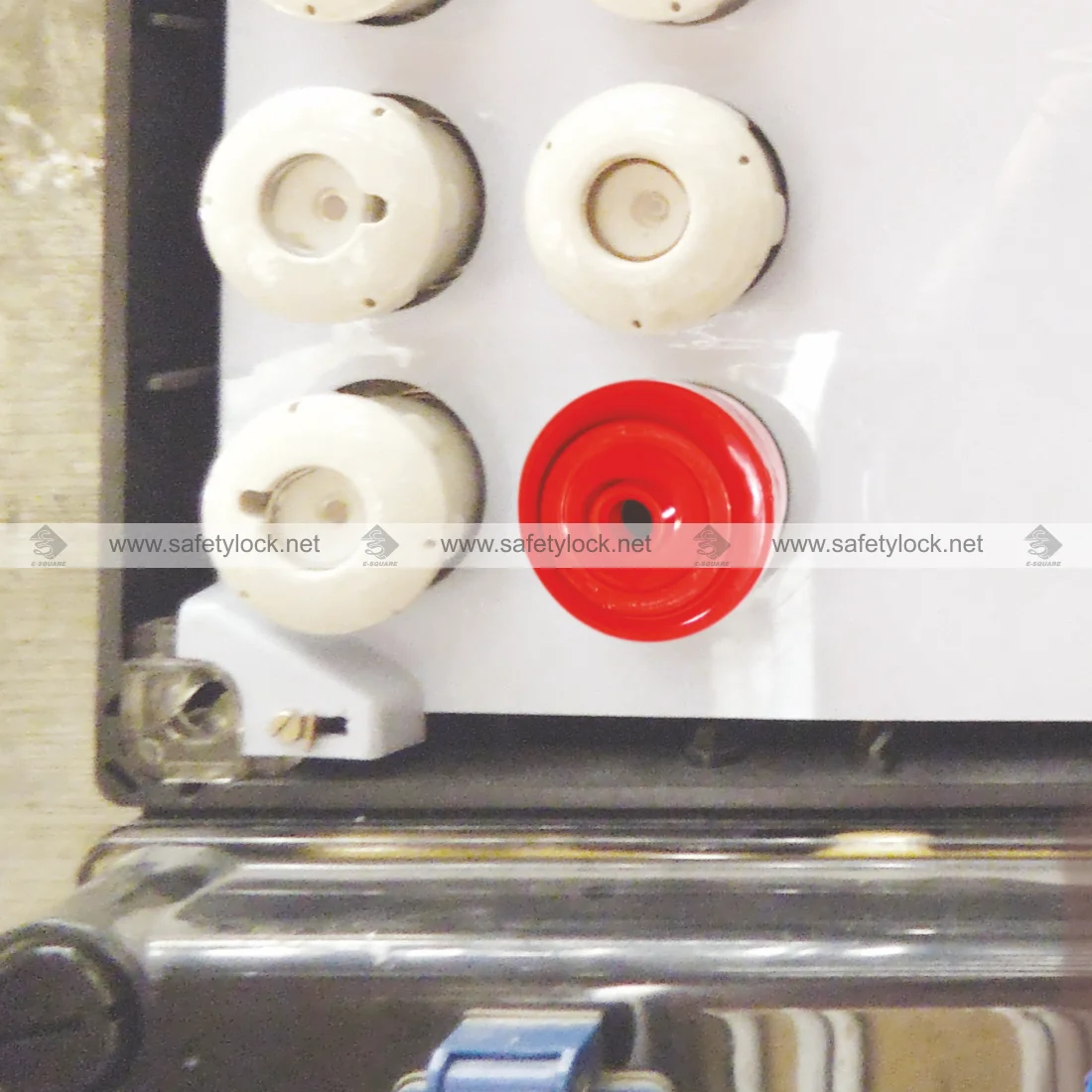
Round Fuse Holder Dummy Kit – Set of RFHD 2, 3 and Operating Tool (ES-OT-FH)
ES-RFHD-KIT
-
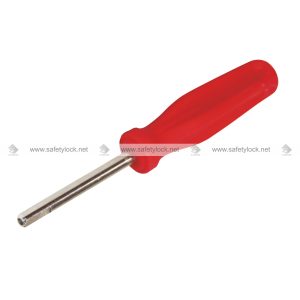
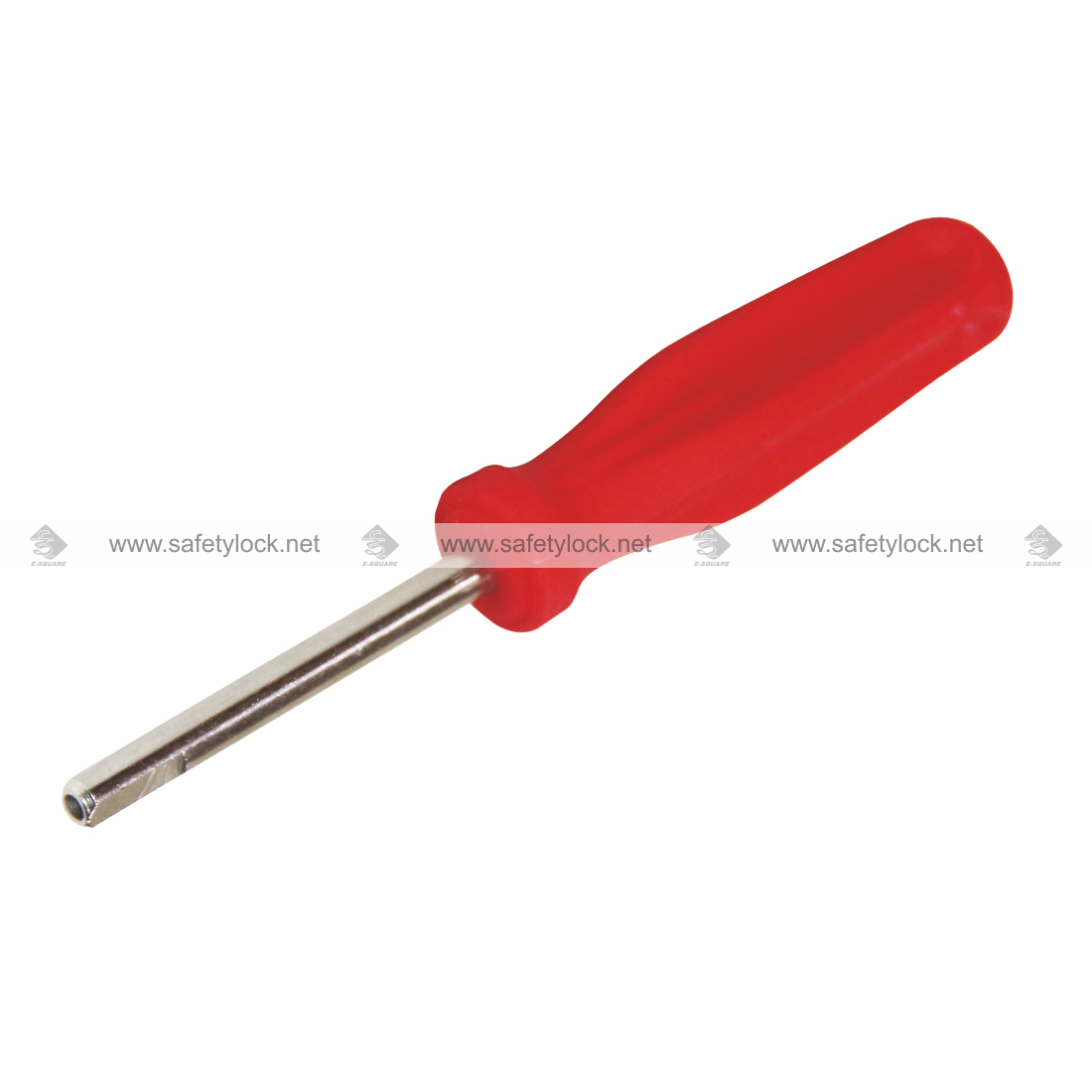
Operating Tool for RFHL and RFHD
ES-OT-RFHL/RFHD
-
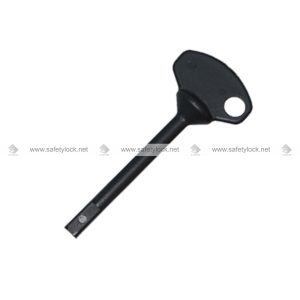
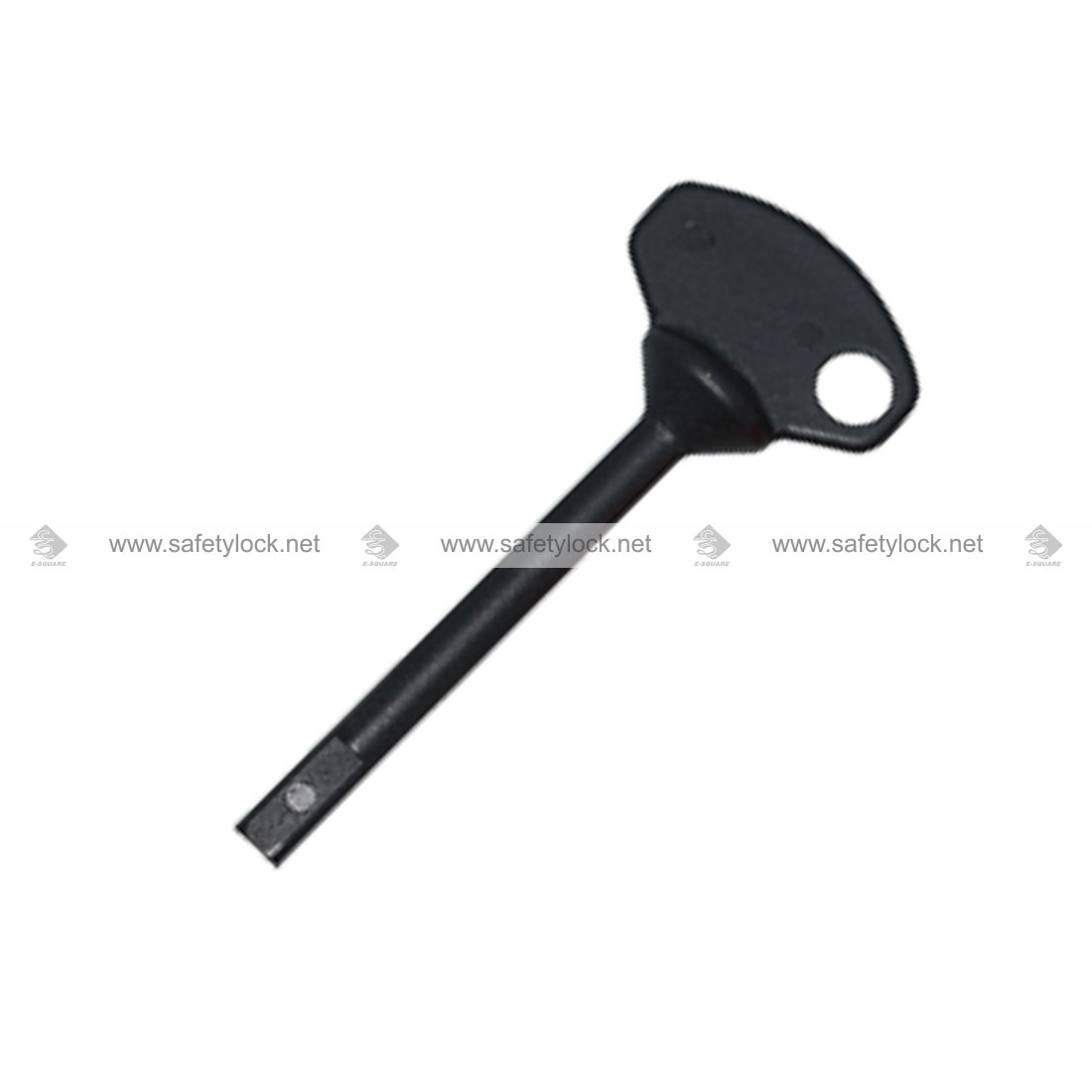
Operating Tool Black Key for Fuse Holder
ES-OT
-
PopularAdd to quote This product has multiple variants. The options may be chosen on the product page
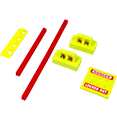
Low Voltage Fuse Rails for NH Fuses – NH00 / NH000 Fuse Holder
ES-FRNHF-S
-
PopularAdd to quote This product has multiple variants. The options may be chosen on the product page
Low Voltage Fuse Rails for NH Fuses – NH1 / NH2 / NH3 Fuse Holder
ES-FRNHF-L
-
PopularAdd to quote This product has multiple variants. The options may be chosen on the product page
Low Voltage Fuse Rails for NH Fuses – Set of 2 (Small & Large)
ES-FRNHF-SET-2
-
Popular
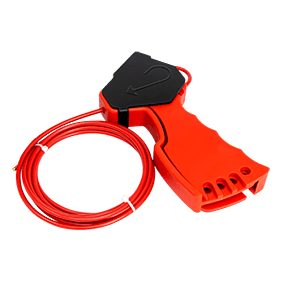
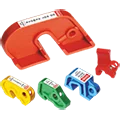
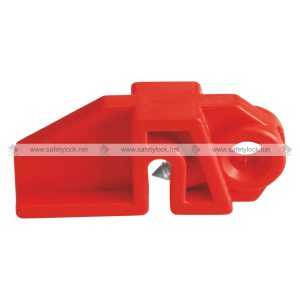
Universal Fuse Holder Lockout – Red
ES-UFHL
-
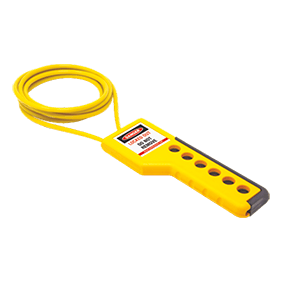
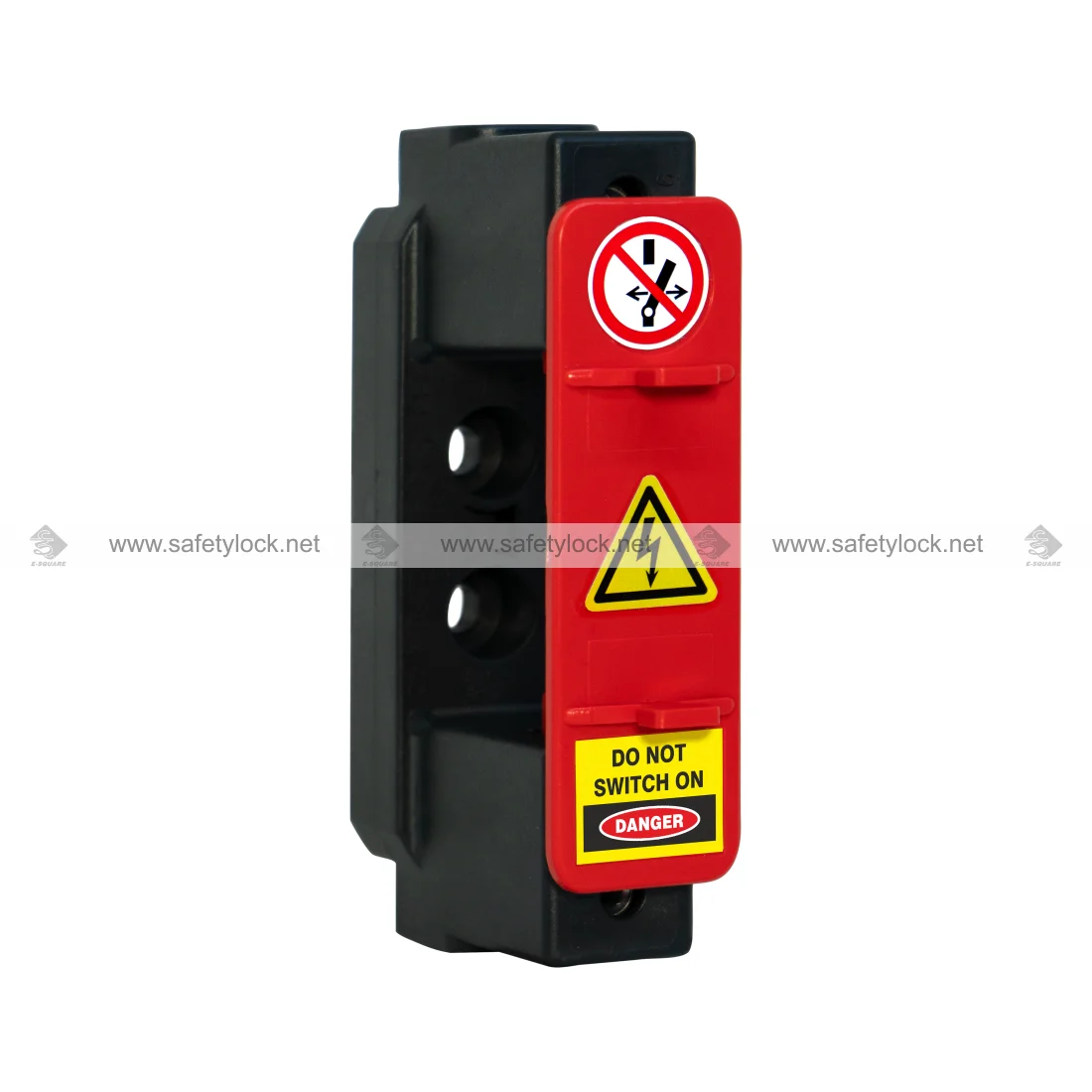
Universal Fuse Holder Lockout – Slim
ES-UFHL-S



Our New Catalogue
Discover the widest range of lockout tagout products available globally.
Enter your email below and get a link to download your digital copy.
What is a Fuse Lockout Device?
A fuse lockout device secures a fuse holder in its de-energised state so a fuse cannot be reinserted while electrical maintenance is in progress. It does not, by itself, de-energise the circuit – that is achieved by opening a disconnector or circuit breaker upstream and verifying the circuit dead. The lockout then occupies the fuse base or grips the fuse carrier, preventing re-insertion by any second worker until the authorised employee removes it.
Like plug and breaker lockouts, the device is a secondary backstop that holds the isolation procedure in place and provides visible confirmation that work is in progress. Our range covers bottle fuses (DIAZED, NEOZED), NH fuse strips, and common cartridge holders up to 400 A.
E-Square – Fuse Lockout Manufacturer & Supplier
E-Square Alliance is India’s largest lockout tagout manufacturer, with over 1,800 LOTO SKUs designed and produced in-house at our New Delhi facility. Our fuse-lockout range is one of the widest available from a single manufacturer – covering DIAZED/NEOZED round and bottle holder lockouts, NH fuse blanking inserts, clamp-style and universal fuse holder lockouts, fuse blockers, and insulated fuse pullers. All tooling, including proprietary operating tools for round fuse inserts, sits within our own moulds, backed by 72 design patents. We hold One Star Export House status and ship direct to industrial buyers, distributors and resellers in 109+ countries.
As an OEM supplier to major international brands, our products meet global procurement quality and compliance standards – a bar we have maintained for 24+ years. E-Square is MSME ZED Gold certified, a Sedex Active Member and a British Safety Council Member. Every fuse lockout is built for real plant conditions: non-conductive ABS/polycarbonate bodies, IEC-compliant dimensional fit, and colour and labelling that survives shift-after-shift handling.
Our Range of Fuse Lockout Devices
We manufacture five families to match the fuse system and the role each device plays in the isolation procedure. Each family below is a live sub-category filter – browse it for exact fuse sizes, current ratings and model codes. If you are unsure which lockout fits your holder, contact E-Square’s technical team.
| Fuse Lockout Family | How it works | Accepts a padlock? | Sizes / SKUs |
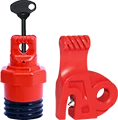
Round / Bottle Fuse Holder Lockout | Two variants. Lockable inserts (RFHL and RFHLC) replace the removed fuse, occupy the base and are secured by a personal padlock through the device. Dummy inserts (RFHD) are the non-lockable counterpart used as a blocking backstop where the upstream disconnect is locked. All install with a proprietary operating tool. | Yes for RFHL, RFHLC. RFHD (dummy) models can be padlocked using a separate PIN-IN type lockout device. | ES-RFHL-2 (DII / KII, E27, 2–35 A, 500 V), ES-RFHL-3 (DIII / KIII, E33, 35–63 A, 500 V), ; ES-RFHLC-1 (E14 or E18 (NEOZED D01+D02), ES-RFHLC-2 (E27 or E33 (DIAZED DII+DIII), ES-RFHD-2 (DII dummy), ES-RFHD-3 (DIII dummy). |
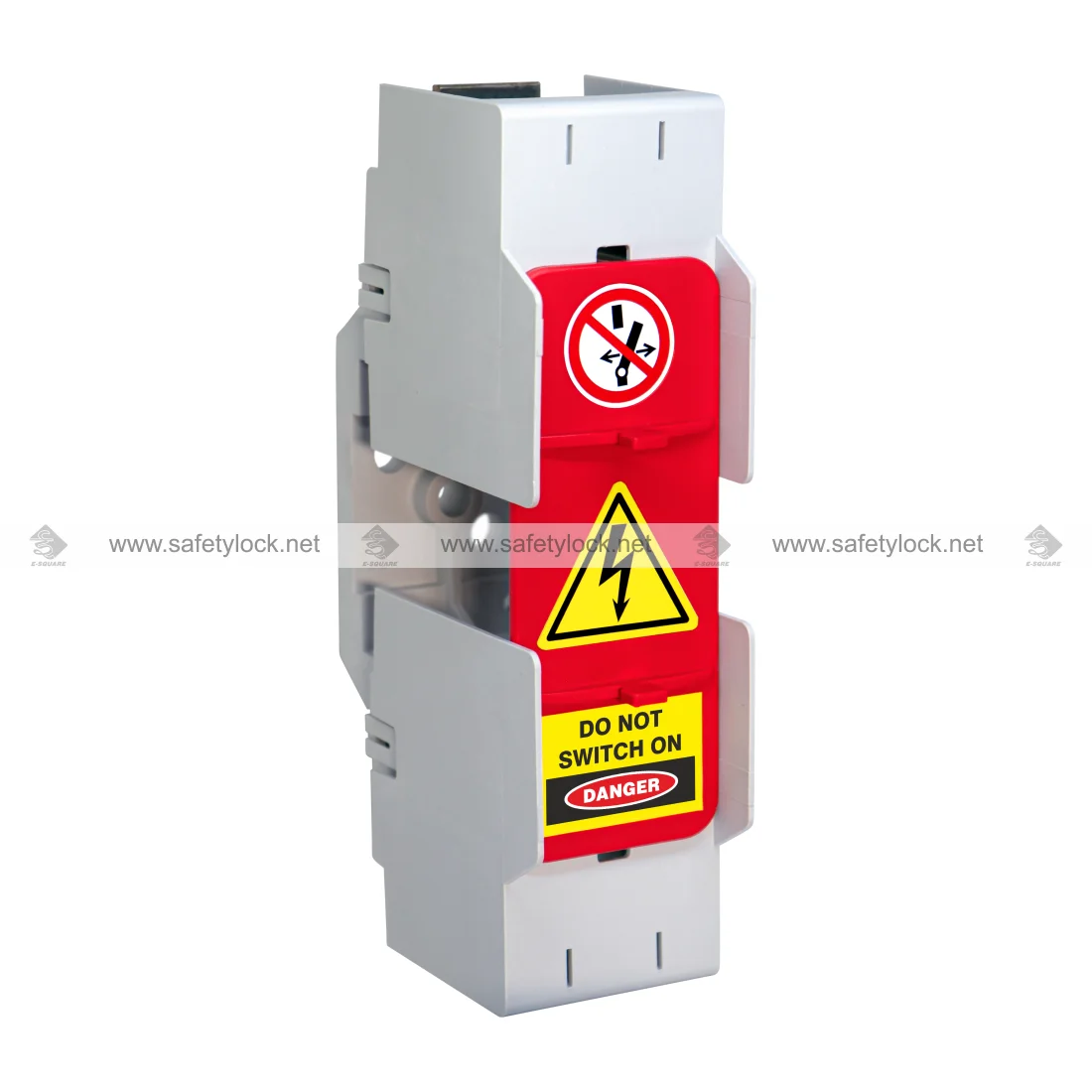
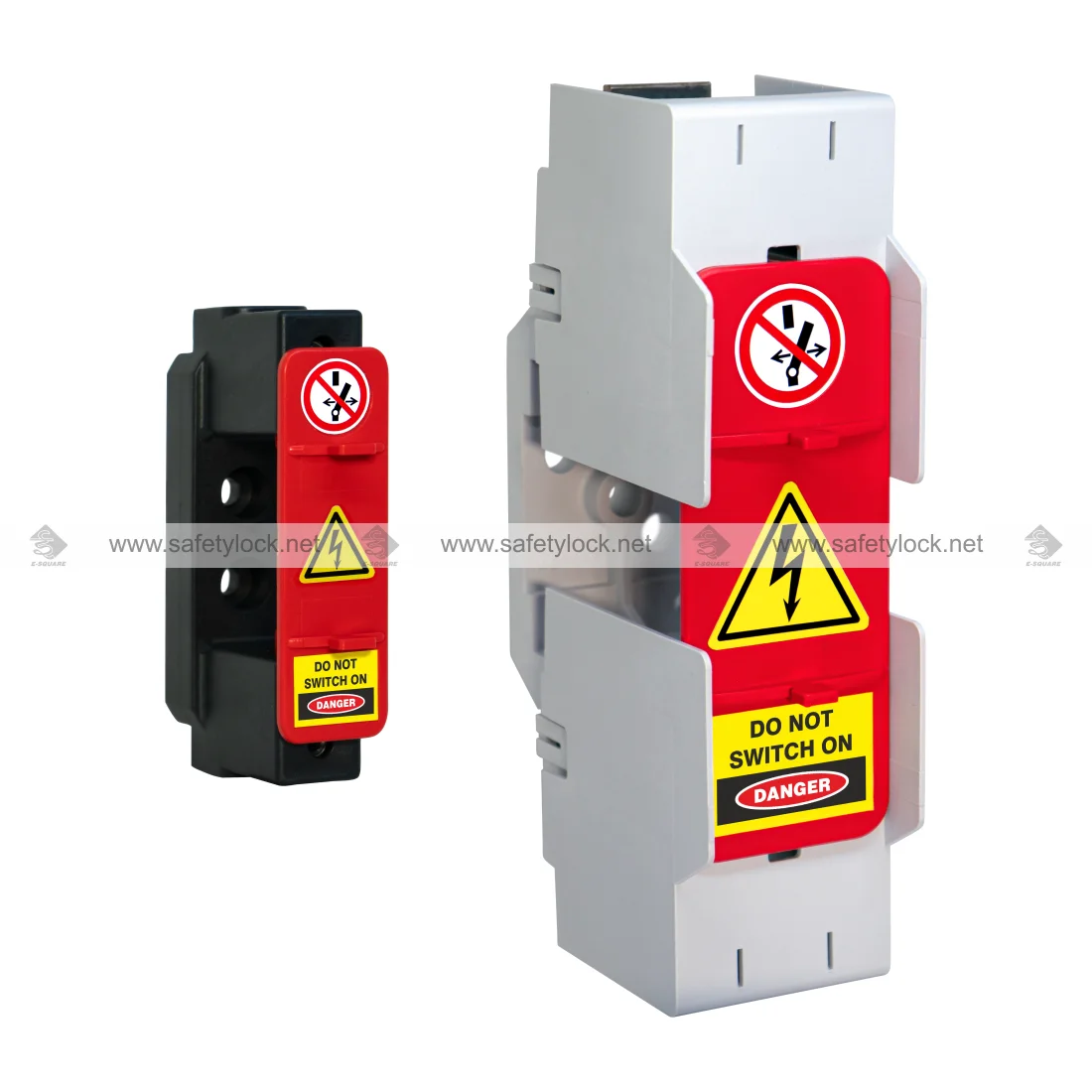
Fuse Rails for NH Fuses | Non-conductive blanking insert that fits into the NH fuse base after live fuses have been removed using an insulated NH fuse puller. Physically prevents re-insertion of a replacement fuse, blocking re-energisation of the load side. | No – the insert is not padlockable; the lockout sits on the upstream disconnect. | ES-FRNHF-L (NH1 / NH2 / NH3); other NH00 / NH000 sizes on request. Use with an insulated NH fuse puller. |
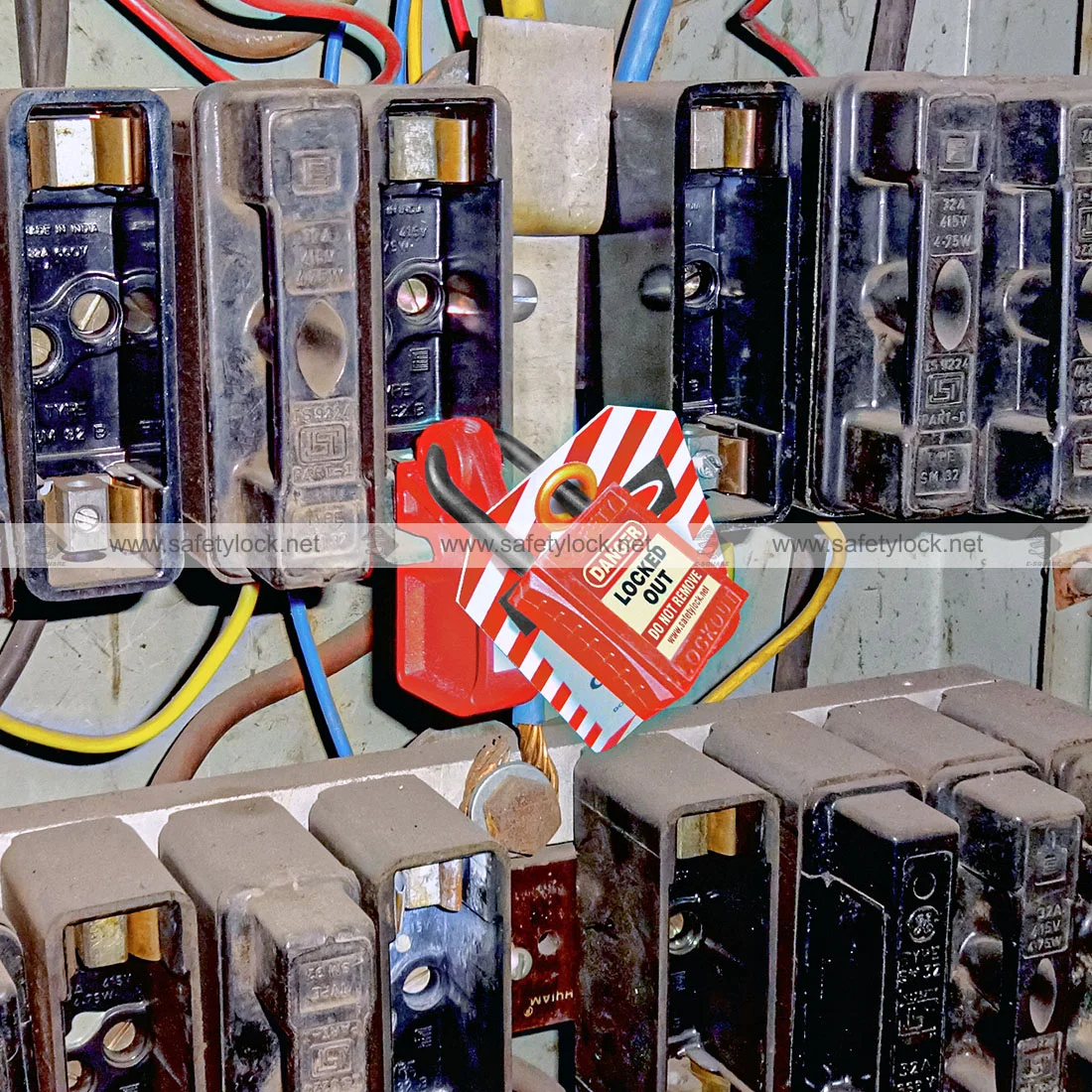
Standard Fuse Lockout | Two sub-types. Clamp-style fuse holder lockouts grip the fuse-holder cap or carrier so it cannot be closed or reinserted, secured by a padlock. Fuse blockers are physical multi-pole blockers that occupy the spaces where fuses have been removed and carry a safety tag. | Yes for ES-FHL-TGT and ES-FHL-WGT. No for ES-FB-2W / ES-FB-4W (tag-only) | ES-FHL-TGT (Thin Grip, 20–400 A holders), ES-FHL-WGT (Wide Grip, 20–400 A holders); ES-FB-2W (2-Way Blocker), ES-FB-4W (4-Way Blocker) |
Universal Fuse Lockout | Adjustable clamp-style lockout that fits a wide range of fuse holder types, useful for sites with mixed or unidentified cartridge holders. Secured by a padlock through a built-in hole. | Yes | ES-UFHL (Red, 20–400 A); ES-UFHL-S (Slim, 20–400 A). Fits cartridge fuse holders across mixed or unidentified estates without requiring a holder-specific model. |
Fuse Puller | Insulated extraction tool for safe fuse removal once the upstream circuit has been isolated. A handling aid, not a lockout device – fitting it is not the lockout step. | Not applicable (handling aid). | Insulated fuse pullers, sized to common holder classes |
Standardising fuse isolation across switchrooms or distribution boards?
We supply the full fuse-lockout range in volume, with colour coding, laser engraving and private labelling for branded LOTO programmes. Custom kitting accepted.
How to Choose the Right Fuse Lockout
The right fuse lockout depends on three things: your fuse system, the amperage class, and whether your procedure requires a padlockable device or a blocking backstop. Answer the five questions below to identify the correct model.
What fuse system is it?
Bottle/round (DIAZED DII/DIII or NEOZED D01–D03) → round fuse holder lockout (ES-RFHL and ES-RGHLC) or dummy (ES-RFHD). Low-voltage NH fuse strips (NH00–NH3 in a fuse-switch disconnector) → NH fuse blanking insert. Common blade/cartridge holders 20–400 A → clamp-style standard lockout (ES-FHL-TGT / ES-FHL-WGT) or universal (ES-UFHL). Multi-pole blade fuse holders where the procedure uses tagout only (no personal padlock required) → fuse blockers (ES-FB-2W / ES-FB-4W).
What’s the fuse size and rating?
Bottle fuses: match the thread and amperage class – DII (E27, 2–35 A), DIII (E33, 35–63 A) for DIAZED; NEOZED uses D01 (E14, 2–16 A), D02 (E18, 20–63 A), D03 (E27, 63–100 A). NH: NH00 / NH000 up to NH1 / NH2 / NH3. Clamp lockouts cover 20–400 A across most common cartridge holders.
Do you need a personal-padlock lockout or a blocking backstop?
If the device itself must accept a personal padlock as the OSHA 1910.147(c)(5) lockout point, choose ES-RFHL, ES-RFHLC, ES-FHL-TGT, ES-FHL-WGT or ES-UFHL. If the upstream disconnect is the primary lockout point (standard for NH fuse-switch disconnectors), the ES-RFHD dummy insert or NH blanking insert acts as the secondary blocking backstop – no padlock is required on the insert itself.
One holder type or many across the site?
For a single standardised holder type, the specific ES-RFHL or clamp lockout is the most secure fit. For a mixed or unidentified estate, the universal fuse lockout (ES-UFHL or ES-UFHL-S) covers a wide range of cartridge holders in a single SKU.
Do you need to remove the fuse first?
Yes – in nearly all procedures. Use an insulated fuse puller to extract the fuse safely once the upstream circuit has been isolated and verified dead. The puller protects against arc-flash exposure during extraction and is a required handling aid for RFHL, RFHD and NH blanking insert procedures. It is not a lockout device.
Not sure which fuse lockout fits your switchgear?
Benefits of E-Square Fuse Lockout Devices
Our fuse-lockout range is engineered to sit cleanly inside a properly designed electrical isolation procedure:
- Padlockable at the fuse point: Satisfies OSHA 1910.147(c)(5) without a separate lockout station.
- Blocks accidental re-insertion: Physical occupation of the fuse base, not just a tag.
- Covers tagout-only deployments: Fuse blockers for multi-pole circuits where lockout conditions aren’t met.
- Non-conductive under fault: ABS/polycarbonate; rated 4°C to 121°C.
- Guaranteed dimensional fit: Sized to IEC 60269-2 and IEC 60269-3 fuse classes.
- Customisable: Colour coding, laser engraving, private labelling, complete LOTO kits.
Compliance & Standards
Our fuse lockout devices are designed to support compliance with the standards that govern how electrical maintenance work is isolated, secured and verified. Key applicable standards include:
- OSHA 29 CFR 1910.147 (Control of Hazardous Energy)
- OSHA 29 CFR 1910.333 (Electrical Work Practices)
- NFPA 70E-2024 Article 120
- EN ISO 14118:2018
- AS/NZS 4024
Regulatory requirements vary by jurisdiction and industry. Always verify current requirements with your local authority or a qualified safety professional.
Fuse Lockout Devices for Every Industry
Anywhere fuse-based isolation is part of the electrical maintenance procedure, our devices apply. Specific demand is heaviest in:
Power & Energy Oil & Gas Chemical Fertiliser Cement Steel & Iron Construction FMCG
Why Choose E-Square Fuse Lockout Devices?
- Full fuse-lockout range, one manufacturer: Five families from bottle/round and NH rail to universal lockouts and pullers, all made in-house
- Direct-from-manufacturer: Factory pricing, low MOQ acceptable, full quality control, fast lead times
- Global supply: Exporting to 109+ countries, Star Export House (DGFT)
- Customisation: Colour coding, laser engraving, private labelling, custom kitting
Fuse Lockout Devices - Frequently Asked Questions
Related LOTO products:
Circuit Breaker Lockout Electrical Panel Lockout Plug Lockout Devices Safety Padlocks Lockout Tags
Whether you need a single device for one fuse holder or are standardising fuse isolation across multiple switchrooms worldwide, E-Square manufactures and ships the full fuse lockout range to your specification.
Get expert advice Reseller & distributor enquiries
Address
- E-Square Alliance Private Limited
512, New Delhi House, Barakhamba Road
New Delhi - 110001, IndiaOffice Timing:
10:00 AM to 06:30 PM (IST) - +91 8750 333 102 (Call)
- +91 8750 333 102 (Whatsapp)
- +91 8750 175 175 (Sanjay)
-
LOTO@safetylock.net
SALE@safetylock.net
Contact Us
We reply within 4 IST business hours. No commitment required.