






















X

Quote Summary

  • You have no products in your cart.

whatsappWhatsapp catalogueDownload Catalogue

How to Choose the Right Lockout Tagout Kit: The Complete Buying Guide – OSHA, AS/NZS, CSA & UK Compliance

date

This guide helps you choose the right lockout tagout kit - whether you're a sole trader buying your first one, a safety manager kitting out a whole facility, or a procurement lead ordering in bulk. Kit types, sizing, padlock materials, compliance by country, and the mistakes people most commonly make. It's all here.

Choosing the wrong lockout tagout kit is a compliance risk you don't notice until the auditor walks in - or worse, until somebody gets hurt. The U.S. Bureau of Labour Statistics consistently links the failure to control hazardous energy to roughly 10% of serious industrial accidents, and OSHA's own data puts "control of hazardous energy (lockout/tagout)" at #4 on their most-cited violations list for FY2025 - up from #5 the year before - with 2,177 citations issued. Globally, the picture is the same: AS/NZS, CSA Z460, and the UK's Electricity at Work Regulations all converge on the same point - if a worker can be hurt by stored or unexpected energy, you need lockable isolation, the right hardware, and a written program.

A Lockout Tagout kit (often shortened to LOTO kit) is how most facilities, contractors, and field technicians solve that hardware problem in one purchase. But a kit is only useful when it matches the energy you're actually isolating. A pure electrician's kit won't help you on a steam line. A facility starter kit won't fit in a contractor's truck. A personal kit won't cover a 30-person planned shutdown.

This guide walks you through every decision - kit types, sizing, materials, compliance, scaling - so that whether you're buying one kit for yourself, kitting out a multi-site operation, or stocking inventory as a reseller, you end up with the right product the first time.

What is a Lockout Tagout Kit?

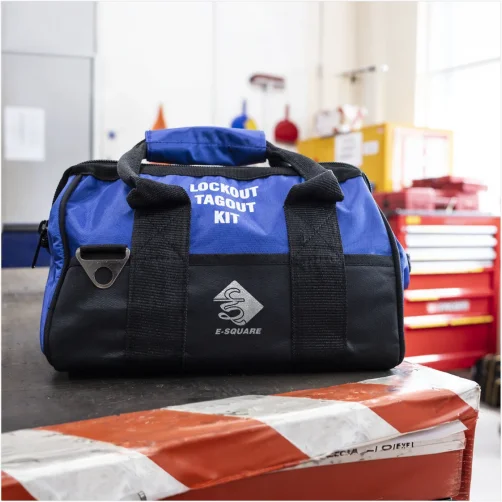
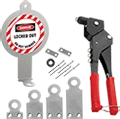
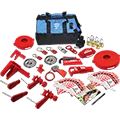
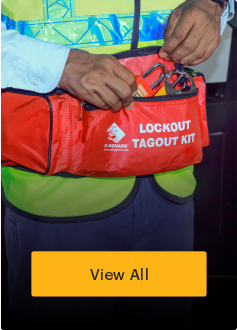
A Lockout Tagout Kit - also called a LOTO KIT or energy isolation kit - is a pre-packed set of energy-isolation devices, padlocks, hasps, and tags packaged together so that a worker, team, or facility has the hardware needed to safely isolate machines and equipment before service or maintenance. Instead of buying a padlock here, a valve lockout there, and tags somewhere else, a kit gives you a curated, application-matched bundle ready to deploy on day one.

Esquare

Why kits exist (and why they outsell single devices in most B2B catalogues):

  • Speed to compliance. A facility setting up its first LOTO program can move from "no devices" to "audit-ready inventory" in a single PO.
  • Application matching. Kits are designed around the actual work being done - electrical maintenance, mechanical fitting, contractor work, or full-facility cover.
  • Cost efficiency. Kit pricing is typically lower than buying each device separately, and standardising on a kit reduces duplicate SKUs in your inventory.
  • Standardisation across teams and sites. When every electrician's truck carries the same kit, training simplifies and audits go smoother.

A good LOTO kit is more than a bag of locks - it's a compliance asset.

When Do You Actually Need a LOTO Kit?

If any of the following apply, you have a legal obligation to control hazardous energy and a LOTO kit is the practical hardware answer:

  • You service or maintain machinery where unexpected energisation, start-up, or release of stored energy could injure a worker. (OSHA 29 CFR 1910.147 - USA.)
  • You operate a workplace covered by AS/NZS 4024 (Safety of Machinery) - Australia and New Zealand.
  • You work on or near electrical installations under the UK Electricity at Work Regulations 1989 and BS EN ISO 50110.
  • You're subject to CSA Z460-20 in Canada or the relevant provincial OHS code.
  • You're certified to ISO 45001 and need documented operational controls for energy-related hazards.

Industries where a LOTO kit is effectively non-negotiable include manufacturing, oil & gas, mining, food and beverage, pharmaceutical, construction, utilities, water and wastewater, automotive, aviation maintenance, warehousing with conveyors, and any commercial facility with serviceable HVAC, refrigeration, or compressed-air systems.

The legal duty falls on the employer to provide the program, the procedures, and the hardware - and on the authorized employee (the worker performing the isolation) to apply it correctly. A kit covers the hardware leg of that triangle.

Regulatory requirements vary by country, state/province, and industry sector. The information below references commonly applicable standards but is not a substitute for site-specific legal advice. Always consult the applicable legislation in your jurisdiction and a qualified safety professional.

The 4 Main Types of LOTO Kits:

Most reputable manufacturers and suppliers - including E-Square Alliance Lockout Tagout Kits range - organises kits into four families. Pick the family that matches your energy types and user count, and 80% of the buying decision is done.

1. Personal LOTO Kits (One Person, Portable)

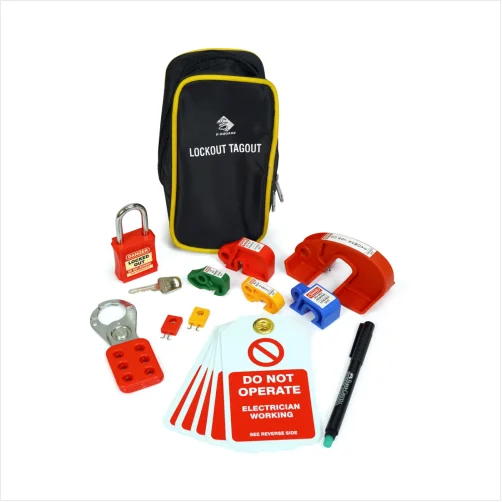
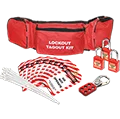
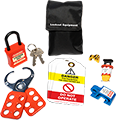
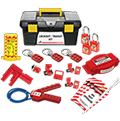
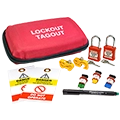
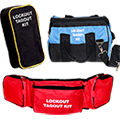
A personal LOTO kit is sized for a single authorized employee. It's typically supplied in a pouch, small case, or tool-bag and contains the minimum hardware that worker needs to lock out the equipment they're trained on.

Typical contents:

  • 1-2 personal safety padlocks (keyed different to the worker)
  • 1-2 lockout hasps (3 to 6 hole)
  • A small assortment of universal devices (cable lockout, basic valve lockout, breaker lockout)
  • 5-10 danger tags
  • A couple of safety tags

Best for:

  • Solo tradespeople (electricians, fitters, refrigeration techs)
  • Frontline maintenance workers who carry their own personal isolation hardware
  • Site contractors who work across multiple client locations
  • "One-per-employee" rollouts in larger facilities - every authorized employee gets their own personal kit

What to watch out for: Personal kits are deliberately compact, so don't expect them to cover an entire facility or every conceivable energy type. They're a personal compliance tool, not a facility one.

🛒 Browse personal LOTO kits at SafetyLock.net →

2. Electrical Lockout Tagout Kits (Breakers, Plugs, Switches)

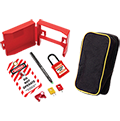
An electrical lockout tagout kit is purpose-built for isolating electrical energy: panel breakers, plug-and-cord equipment, disconnect switches, fuses, and toggles. The padlocks are usually non-conductive nylon so they're safe to handle around live conductors.

Typical contents:

  • 4-8 nylon safety padlocks (keyed different, often colour-coded)
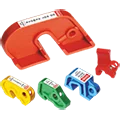
  • Universal multi-pole circuit breaker lockouts (covering common breaker brands - Schneider, ABB, Eaton, Siemens, Square D)
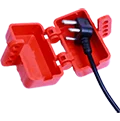
  • Plug lockouts for 110V, 220V/240V, and 3-phase industrial plugs
  • Wall switch / toggle switch lockouts
  • Fuse lockouts (cartridge / blade)
  • 1-2 multi-lock hasps (insulated where applicable)
  • Cable lockout for awkward isolation points
  • Electrical-specific danger tags and "Do Not Energise" labels

Best for:

  • Industrial and commercial electricians
  • Electrical maintenance teams
  • Solar / EV charging / data centre techs
  • MEP contractors working on commercial fit-outs
  • Facilities with significant electrical isolation requirements (panels, MCCs, motor controls)

What to look for: Make sure the breaker lockouts cover the specific breaker models you actually have on site. Universal breaker lockouts get you 80% of the way; the remaining 20% may need brand-specific devices. Take five minutes to walk a panel before you buy.

Important: LOTO hardware isolates energy. It doesn't protect against arc flash.

If you're working on live or recently-live electrical equipment, you also need an arc flash risk assessment under NFPA 70E (USA) or BS EN 50110 (UK/Europe). Non-conductive lockout devices protect against inadvertent contact during isolation - they are not a substitute for arc flash PPE or calculated safe approach distances. If your site hasn't done an arc flash study, that's a separate, urgent conversation.

🛒 See electrical lockout devices and kits →

3. Mechanical / Valve Lockout Kits (Valves, Pipes, Hydraulics, Pneumatics)

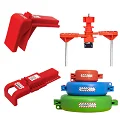
A mechanical LOTO kit (sometimes called a valve LOTO kit or fitter's kit) is the answer for processes - fluids, gases, steam, hydraulic pressure, compressed air. It contains the device range needed to lock out ball, gate, butterfly, plug, and quarter-turn valves, plus the cable lockouts and hasps to handle the awkward stuff.

Typical contents:

  • Ball valve lockouts in multiple sizes (covering 6mm to 65mm pipe range typically)
  • Gate valve lockouts (handwheel covers, multiple diameters)
  • Butterfly valve lockouts
  • Pneumatic / air line lockouts (push-button, ball-valve style)
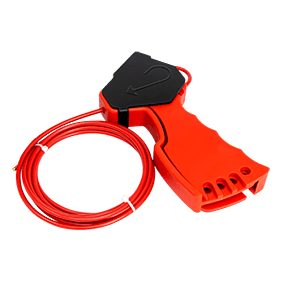
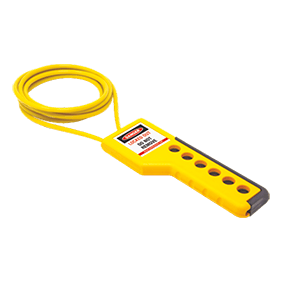
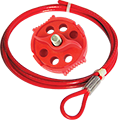
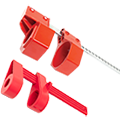
  • Cable lockouts (1.8m and 3m typical) for non-standard valves
  • Universal quarter-turn lockout
  • 4-8 safety padlocks (often hardened steel or stainless for industrial environments)
  • 2-3 multi-lock hasps
  • 10+ danger tags


Best for:

  • Mechanical fitters and maintenance technicians
  • Process plant operators
  • Refrigeration and HVAC techs
  • Oil & gas, chemical, water/wastewater technicians
  • Pharma and food-processing maintenance

What to look for: Pipe size, temperature, and chemical compatibility. Standard nylon valve lockouts are good to ~80°C; if you've got steam lines or aggressive chemistries, you need high-temperature variants or stainless options. Always size by the valve handle or pipe diameter, not by what looks similar in the catalogue.

🛒 Find mechanical and valve lockout kits →

4. Combo / Facility / Shutdown LOTO Kits (Multi-Energy, Multi-Worker)

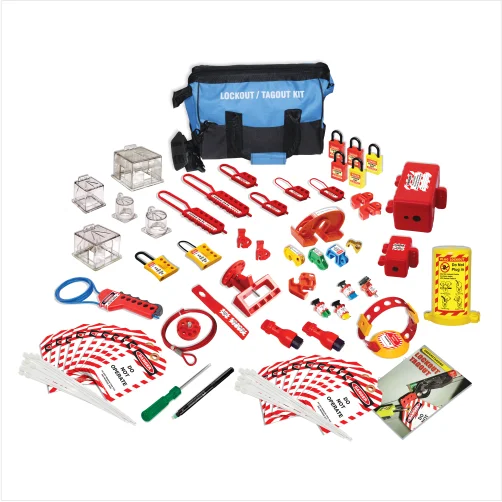
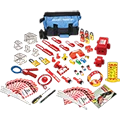
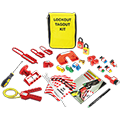
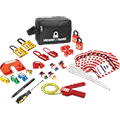
The combo LOTO kit- also marketed as a facility starter kit, shutdown kit, or station kit- is the comprehensive option: one kit covering electrical, mechanical, pneumatic, and group-isolation scenarios, sized for a team rather than an individual.

Typical contents:

  • 10-20+ safety padlocks (mixed colours for departmental coding)
  • 3-6 multi-lock hasps (including 6-hole and 12-hole)
  • Full electrical isolation range (breakers, plugs, switches, fuses)
  • Full valve range (ball, gate, butterfly, quarter-turn)
  • Multiple cable lockouts (different lengths)
  • Pneumatic and hydraulic isolation devices
  • 20+ tags, in multiple categories (Danger, Out of Service, Caution)
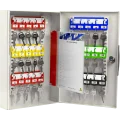
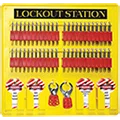
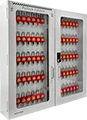
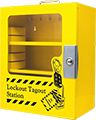
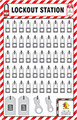
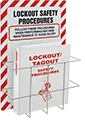
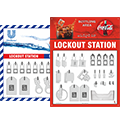
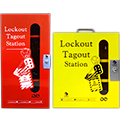
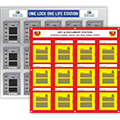
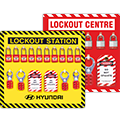
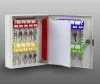
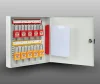
  • Also supplied as a wall-mounted lockout station or shadow board options

Best for:

  • Facilities setting up their LOTO program from scratch (the starter kit use case)
  • Planned shutdowns and turnarounds where dozens of isolation points and workers are involved
  • Departmental stations on the production floor
  • Multi-site businesses standardising kit content across locations
  • Resellers and distributors stocking complete inventory packages

What to look for: Match kit size to maximum simultaneous workers and maximum simultaneous isolation points.

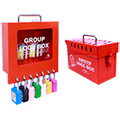
Group Lockout Boxes:

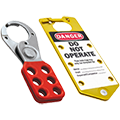
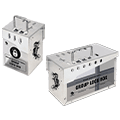
When multiple workers are on the same machine, each one needs personal isolation control. A group lockout box holds the keys to all energy-isolating devices. Every worker clips their own padlock on. The machine stays locked until every single person removes their own lock - nobody can remove anyone else's.

Use one for: planned shutdowns with multiple workers, shift handovers (incoming worker locks before outgoing unlocks), and contractor LOTO. Get a 12-hole box for most jobs; 20-hole or 30-hole for large shutdowns. Check your combo kit includes one - many don't. So make sure to order your GLB: https://www.safetylock.net/lockout-tagout-devices/group-lockout-box/

🛒 See combo and facility LOTO kits →

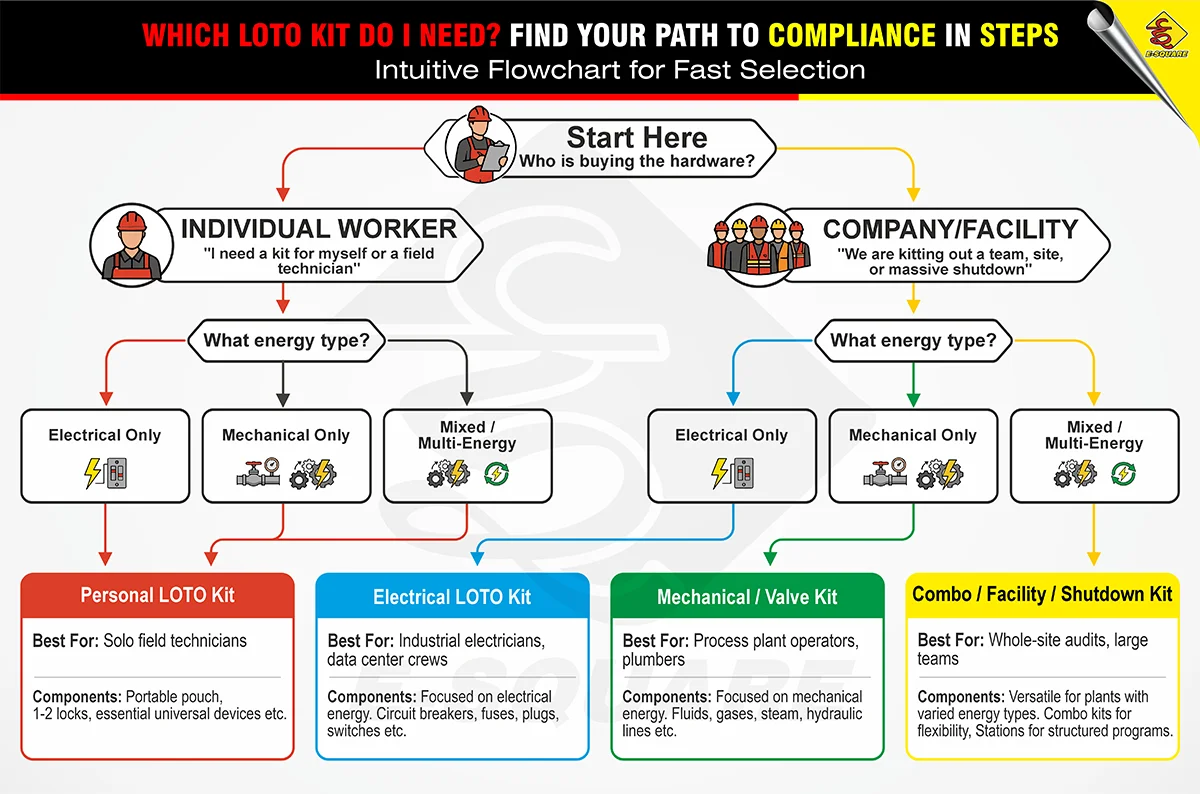
The LOTO Kit Decision Tree: Which Kit Do I Need?

If you take nothing else from this guide, take this. Run through these four questions in order and you'll land on the right kit family.

Question 1 - How big is the facility (or the job)?

  • Solo tradesperson, contractor, or one workerPersonal kit (then refine in Q2 by energy type).
  • Maintenance team or departmentElectrical or Mechanical kit, depending on Q2.
  • Whole facility, planned shutdown, or new siteCombo / facility / shutdown kit.
  • Multiple sites or a reseller stocking inventoryCombo kits in volume, plus standardised personal kits per worker.

Question 2 - What energy types do you isolate?

  • Mainly electrical (breakers, panels, plugs, switches) → Electrical kit.
  • Mainly process/mechanical (valves, pipes, pneumatic, hydraulic, steam) → Mechanical kit.
  • Both, or unsureCombo kit.
  • Industrial multi-energy environments (oil & gas, mining, heavy manufacturing) → Combo kit with industry-specific upgrades.

Question 3 - How many people will isolate at the same time?

  • Just me → 1–2 personal padlocks + 3-hole hasp is fine.
  • Small crew (up to 6) → 6-hole hasps and at least 6 padlocks.
  • Large crew or planned shutdown (10+) → 12-hole hasps, group lockboxes, and at least one padlock per authorized employee.

Question 4 - Is the environment "standard" or harsh?

  • Indoor, dry, room-temperature → standard nylon/aluminium hardware is fine.
  • Wet, corrosive, food-contact, marine → stainless steel padlocks, hygienic-grade lockouts.
  • Hazardous area / ATEX → non-sparking, ATEX-rated hardware.
  • Hot lines (steam, hot water) → high-temperature valve lockouts.

By the end of those four questions, you should have a kit type, an approximate device count, a hasp size, a padlock material, and any environmental upgrades. Take that specification to your E-Square product team and buy with confidence.

💬 Talk to a LOTO specialist. Not sure which kit fits your facility? E-Square’s lockout safety experts will walk through your isolation points and spec the right kit - for one truck or one hundred sites. Get free advice →

Product Selection Guide: What Makes a Good LOTO Kit - and What Makes a Cheap One?

Once you've picked the kit family, these are the buying criteria that separate a good kit from a cheap one.

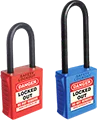
  1. LOTO Padlocks - material and quantity. The four most common safety padlock options, and where each one fits:
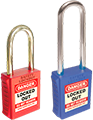
  • Hardened steel shackle padlocks - the most widely used industrial LOTO padlock. A tough, weather-resistant ABS body paired with a hardened-steel shackle that resists cutting, sawing, and bolt-cropping. The default choice for general industrial maintenance, mining, heavy manufacturing, and any high-traffic site where padlocks take a beating.
  • Nylon (non-conductive) - the safe choice for electrical work and wet, corrosive, or chemically aggressive environments. Lightweight, dielectric, and won't corrode.
  • Aluminium - a good lightweight, anodised option for everyday general-industrial use where extreme cut-resistance isn't needed. Often colour-coded by department.
  • Stainless steel - for food and beverage, pharma, marine, and high-corrosion environments where hygienic wash-down or salt exposure is routine.

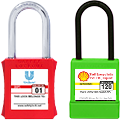
Plan one personal padlock per authorized employee, plus 20-30% spares for damaged or lost locks. On key systems: use keyed different padlocks - meaning each padlock in the set has its own unique key and no two locks can be opened by the same key. This is essential for personal isolation. Never distribute padlocks that share a key among different workers. So, Choose keyed different (KD) for personal isolation; add a master keyed (MK) set for supervisor override only where program rules explicitly allow it. Use colour coding (red, blue, yellow, green, black) to separate departments, trades, or shifts and for making audits faster.

  1. Hasp size and lock-hole count. A 6-hole hasp is the sweet spot for most maintenance crews. Move to 12-hole hasps for shutdowns. Insulated hasps for electrical work. Confirm the jaw opens wide enough for your isolation points' lockout eyes - a hasp that won't fit is a hasp you'll never use.
  2. Valve lockout coverage. Walk your plant before you buy. Note pipe diameters at every isolation point you'll lock out, plus handle types (lever, handwheel, T-handle). Match the kit's valve range to that list, or specify a custom kit.
  3. Breaker lockout coverage. Same principle - check what's actually in your panels. Universal breaker lockouts cover most generic MCBs; brand-specific devices may be needed for certain Schneider, ABB, Siemens, or Eaton models.
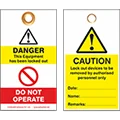
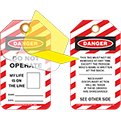
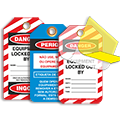
  4. Tags and labels. Look for: minimum 50 lb (≈22 kg) pull strength on the tag attachment, durable card stock, weatherproof, with space to write the worker's name, date, and reason. Provide multiple tag categories - Danger, Out of Service, Caution.
  5. Carrying solution. Personal kits should fit a tool-bag or pouch and stand up to daily abuse. Facility kits should come on a wall-mounted shadow board so devices are visible, accountable, and easy to return after use.
  6. Custom kitting and bulk supply. Off-the-shelf kits work for ~70% of buyers. The other 30% - multi-site operations, industries with specific isolation challenges, resellers - should ask their supplier about custom kitting, branded packaging, and volume discount tiers. E-Square builds custom LOTO kits to spec for facilities of any size.
  7. Record-keeping and accountability. A kit isn't a system until you can prove how it's used. A LOTO Register set (E-Square ES-LR, Register A+B) closes that gap - Register A logs energy isolation, Register B tracks lock issue/return - giving you an audit-ready paper trail for inspections and an at-a-glance view of which locks are out and which have come back.


📦 Equipping a facility, fleet, or whole network of sites?

E-Square supplies LOTO kits in bulk with custom contents, branded packaging, and global shipping. Request a bulk quote →

🤝 Resellers and distributors welcome.

Trade pricing, competitive wholesale tiers, drop-ship options, and reliable supply for distributors worldwide. Enquire about reseller accounts →

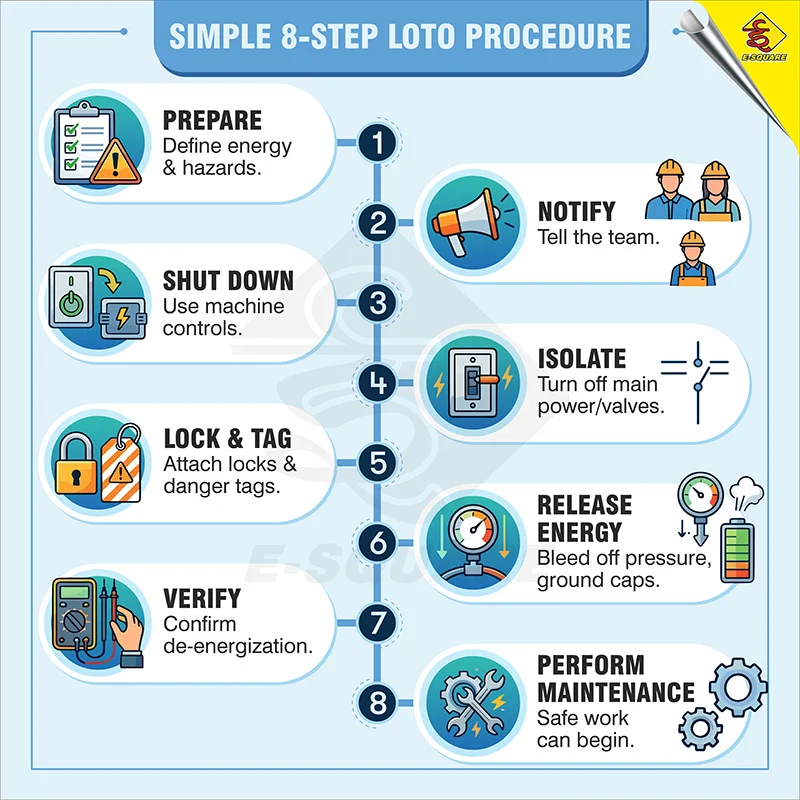
How to Use Your LOTO Kit: The 8-Step Procedure?

Buying the right kit is half the job. Using it correctly is the other half. Here is the standard LOTO sequence - drawn from OSHA 1910.147(d) and aligned with AS/NZS 4024 and CSA Z460. Train every authorized employee on these steps before issuing them a kit.

  1. Prepare for shutdown. Identify all energy sources: electrical, mechanical, hydraulic, pneumatic, thermal, chemical, gravitational, stored. Don't miss any.
  2. Notify affected employees. Tell anyone who works in or near the area that lockout is about to occur.
  3. Shut down the equipment. Use normal stopping procedures - do not rely on emergency stops.
  4. Isolate the energy source. Operate disconnects, close valves, block movement. Do this for every energy source identified in Step 1.
  5. Apply your LOTO devices and personal padlock. Each authorized employee applies their own personal lock - never one lock for the whole team. Add a danger tag with the worker's name, date, and reason.
  6. Release stored energy. Bleed pressure, discharge capacitors, block gravitational loads, vent process residuals.
  7. Verify isolation: Lockout-Tagout-Tryout( LOTOTO). Try-for-start, test for voltage with an approved test instrument, confirm pressure gauges read zero. Don't assume - verify. Write it down.
  8. Perform the work. Service or maintain the equipment. When complete, reverse the sequence: clear tools and people, remove devices and locks (each worker removes their own), and notify affected employees the equipment is being re-energised.

The most common procedural failure isn't equipment-related - it's skipping verification (Step 7). Build it into muscle memory.

Compliance & Standards: What the Regulators Expect

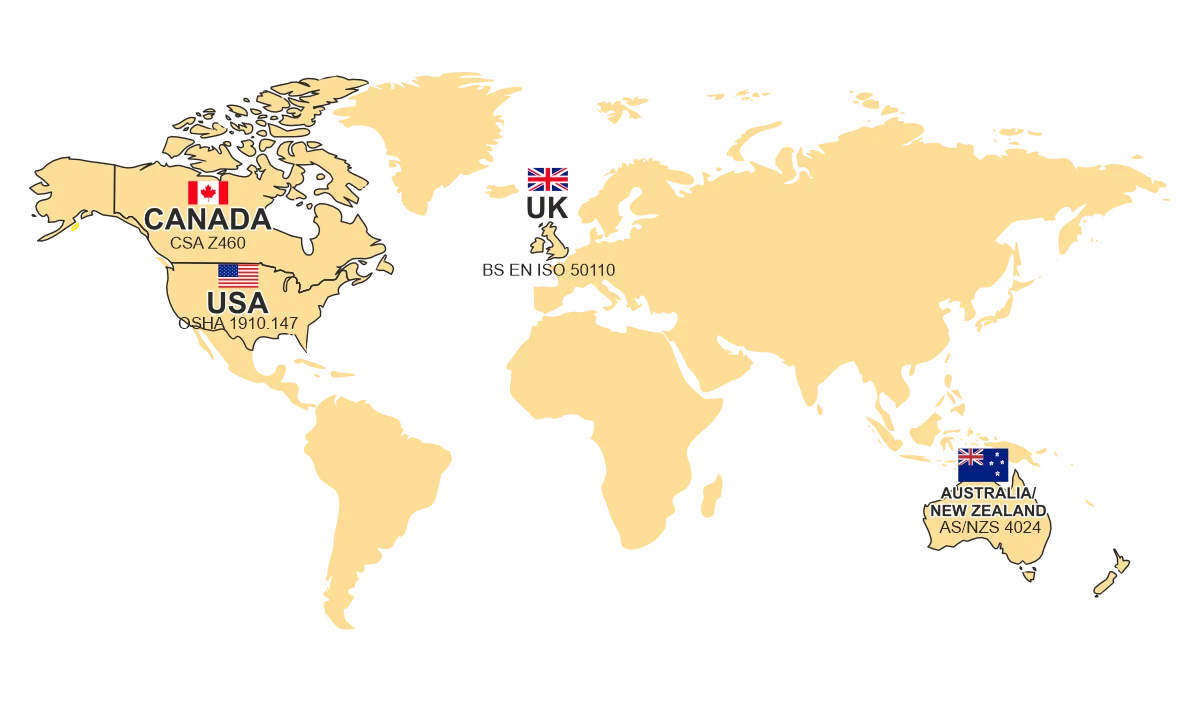
A kit isn't compliant on its own - your program is. But the kit is the hardware backbone of that program, and regulators expect the hardware to meet specific standards. Here's the global picture.

USA - OSHA 29 CFR 1910.147

The USA's Control of Hazardous Energy standard is the most prescriptive of the major frameworks and the one most commonly cited globally as the LOTO baseline.

What OSHA expects from your hardware (s.1910.147(c)(5)(ii)):

  • Durable - devices must withstand the environment they're used in.
  • Standardised - by colour, shape, or size across the program.
  • Substantial - preventing removal without excessive force or unusual techniques.
  • Identifiable - indicating which authorized employee applied each device.

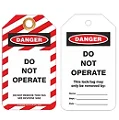
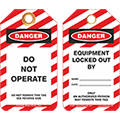
Tags must additionally carry a warning legend such as "Do Not Operate", "Do Not Start", or "Do Not Energise". OSHA also requires a written energy control program, machine-specific procedures, annual periodic inspections by an authorized employee other than the user, and training for authorized, affected, and other employees.

The most-cited subsections are 1910.147(c)(4) (inadequate written procedures) and 1910.147(c)(7) (inadequate training) - proof that even a perfect kit won't save a poor program.

Australia & New Zealand - AS/NZS 4024.1601-1603

The AS/NZS 4024 Safety of Machinery suite is risk-assessment-based rather than prescriptive. Three parts matter for LOTO:

  • AS/NZS 4024.1601 - design of controls, interlocks, guarding.
  • AS/NZS 4024.1602 - isolation of energy.
  • AS/NZS 4024.1603 - isolation of energy: lockout devices.

Practical expectations: a documented isolation register per machine (energy type, isolation point, device, position), a risk assessment identifying every energy source (electrical, hydraulic, pneumatic, gravitational, thermal, chemical, spring/stored), verification of isolation before work begins ("try-for-start" or test instrument), and personal locks per worker in group isolation - not a single supervisor lock for the whole crew.

WHS legislation varies by state and territory in Australia. Most states adopt the model WHS Act; Victoria and Western Australia have differences. New Zealand's HSWA 2015 mirrors the model framework. Always verify with the relevant SafeWork or WorkSafe authority.

UK & Europe - Electricity at Work Regulations 1989 / BS EN ISO 50110 / PUWER

The UK doesn't use the term "LOTO" the way North America does but the requirements are functionally identical. Key instruments:

  • Electricity at Work Regulations 1989 (EAW) - work on or near live conductors prohibited unless impracticable.
  • BS EN ISO 50110-1 - operation of electrical installations; defines isolation, securing against re-energisation, and verification of de-energisation.
  • Provision and Use of Work Equipment Regulations 1998 (PUWER) - requires effective means of isolation from all energy sources.
  • Pressure Systems Safety Regulations 2000 (PSSR) - covers pressure / hydraulic / pneumatic systems.

Practical kit expectations: lockable isolation points, padlock-eye or lock-off tab compatibility, warning notices applied at the isolation, dissipation of stored energy (capacitors discharged, pressure bled), and proving dead with approved test equipment before contact. Work must be performed by or under the supervision of a "competent person".

Canada - CSA Z460-20

CSA Z460-20 (Control of Hazardous Energy - Lockout and Other Methods) is Canada's national standard and is more comprehensive than OSHA in scope. It covers all energy types explicitly, including gravitational, mechanical, thermal, chemical, and radiation - not just electrical and pressure.

Key expectations: a senior-management-endorsed Hazardous Energy Control Program (HECP) with annual review, machine-specific Energy Control Procedures (ECPs) (generic procedures aren't acceptable for complex equipment), a competency-based training model where workers must demonstrate practical ability rather than just attend a course, and a documented hierarchy of controls (lockout > tagout > alternative methods such as blocked, blanked, or grounded).

OHS legislation is provincial in Canada - Ontario (OHSA), Alberta (OHS Code Part 15), British Columbia (OHS Regulation Part 10), and Quebec (RSST) each reference or adopt CSA Z460 with local nuances.

International - ISO 45001:2018

ISO 45001 doesn't prescribe LOTO procedures, but if your organisation is certified, your LOTO program must be visible inside your OH&S Management System: hazardous energy identified as a hazard, operational controls documented, worker participation evidenced, and records maintained.

Always verify current requirements with your local regulator or a qualified safety professional. The above is general guidance, not legal advice.

Common LOTO Kit Buying Mistakes (and How to Avoid Them)

Across hundreds of customer conversations, the same five mistakes come up again and again:

Buying for today's headcount, not tomorrow's project. A 6-padlock kit is fine for a 6-person crew - until you bring in a contractor, run a shutdown, or grow the team. Build in a 30% buffer.

Underestimating valve range. Buyers walk one pump, see two ball valves, and order a ball-valve-only kit. Then they hit the gate valve they forgot about. Walk the whole asset.

Choosing the wrong material for the environment. Nylon padlocks in a wash-down food plant. Steel padlocks on an electrical isolation. Standard valve lockouts on a steam line. Match material to environment from the start.

Skipping the tag attachment standard. Cheap tags fail the OSHA 50 lb pull-strength test. Auditors notice. Buy quality.

No custom-kitting conversation for multi-site rollouts. If you're equipping more than one facility, talk to your supplier about a standardised custom kit before the first PO. It saves 6 months of inventory mismatch.

Frequently Asked Questions

Q.1 What's the difference between a personal LOTO kit and an electrical LOTO kit?

A personal kit is sized for one worker and includes a small mix of devices (padlocks, hasps, a few isolation devices, tags) for the equipment they personally maintain. An electrical kit is purpose-built for isolating electrical energy - breakers, plugs, switches, fuses - and is usually sized for an electrical maintenance team rather than a single person.

Q.2 How many lockout padlocks do I need in my kit?

Plan one keyed-different padlock per authorized employee, plus 20-30% spares for damaged or lost locks. A 6-person maintenance crew should hold at least 8 padlocks. Facilities with shift-based teams should multiply by the number of concurrent shifts on a typical day.

Q.3 Is tagout acceptable instead of lockout under OSHA?

Only when lockout is genuinely infeasible. OSHA 1910.147 requires tagout to be at least as effective as lockout, with additional measures - such as removing an isolating circuit element, blocking a control switch, or opening an extra disconnecting device. In practice, most modern equipment supports lockout, and tagout-only programs invite citations.

Q.4 Can I buy LOTO kits in bulk for multiple sites?

Yes. E-Square supplies LOTO kits in bulk with custom contents, branded packaging, and dedicated account management for multi-site businesses. Custom kitting is available with no minimum order quantity for trade accounts.

Q.5 Do I need different LOTO kits for different industries?

The kit families are the same (personal, electrical, mechanical, combo) but the contents should be tailored. Food and beverage needs hygienic-grade hardware; construction favours portable contractor kits; mining uses heavy-duty steel hardware. Talk to your E-Square about industry-specific kitting.

Q.6 What size valve lockout do I need for my pipework?

Match the lockout to the valve handle size or pipe diameter at the point of isolation, not to the pipe spec on the drawings. Most ball valve lockouts are sized in two or three ranges (e.g. 6-25mm, 25-65mm). When in doubt, a universal cable lockout will fit almost any valve type.

Q.7 Do I need LOTO training before I can use these devices?

Yes - every major regulator requires it. OSHA requires training for authorized and affected employees; CSA Z460 requires demonstrated competency, not just attendance; AS/NZS expects training as part of risk-based isolation procedures. Hardware without training is not compliance.

Q.8 How often should LOTO procedures be inspected?

OSHA requires periodic inspection of each energy control procedure at least annually, performed by an authorized employee other than the one using the procedure, with a written certification (employee name, date, machine ID, inspector name). CSA Z460 also requires annual review. AS/NZS recommends review on plant modification, after an incident, or at minimum every five years.

Q.9 Can resellers and distributors order LOTO kits at trade prices?

Yes. E-Square runs a reseller program with trade pricing, volume discounts, drop-ship options, and global supply. Get in touch via the reseller enquiry form to set up an account.

The Bottom Line: Three Takeaways

  1. Pick the kit family that matches your scope. Personal for one worker, electrical for power isolation, mechanical for process/valves, combo for facilities and shutdowns. Don't over-buy or under-buy.
  2. Walk the asset before you order. Pipe diameters, breaker brands, isolation point counts, environmental conditions. Five minutes of survey saves a wasted PO.
  3. Compliance is the program, not the product. A great kit + a written program + trained workers + verified isolation = audit-ready. Skip any of the four and you have a problem.

Whether you're a sole trader buying your first kit, an EHS manager standardising LOTO across a 10-site network, a procurement lead sourcing bulk stock, or a distributor adding a category to your catalogue E-Square is set up to supply you globally.

💬 Talk to a LOTO specialist. Get free, no-obligation advice on the right kit for your facility. Get expert advice →

📦 Request a bulk quote. Equipping multiple sites or a contractor fleet? We supply LOTO kits in volume with fast global shipping. Request a quote →

🏭 Build your own kit. Tell us your isolation points, energy types, and headcount — we'll spec a kit to match. Start your custom kit →

🤝 Resellers and distributors. Trade pricing, wholesale tiers, drop-ship globally. Enquire about reseller accounts →

About the Author

Esquare

A team of safety professionals and educators united to enhance workplace safety with essential Lockout Tagout knowledge. We offer expertise to foster safety compliance and effective LOTO protocols across industries.

E-Square Blog: Expert Analysis and Best Practices for Isolation Safety

The E-Square blog features advice, information and support on everything related to Lockout Tagout, including best practices, industry news, latest innovations and regulatory updates.

Address

Contact Us

We reply within 4 IST business hours. No commitment required.


    Worldwide Delivery

    Worldwide Delivery

    Via Fastest Mode Available
    Wide Choice

    Wide Choice

    1800+ Items available
    Customisation Available

    Customisation Available

    No MOQ for standard products
    Direct Technical Support

    Direct Technical Support

    From our expert LOTO Engineers
    Contact<br>us Contact
    us
    Call<br>us Call
    us
    Download<br>catalogue Download
    catalogue
    Become<br>a reseller Become
    a reseller
    Any Questions?
    popup img
    In Lockout Tagout, every detail counts. Let’s discuss yours.

    Hi! I'm Pyush, the Technical Director at E-Square

    Please write to me here if you have any questions or require any kind of assistance. We will get back with an answer ASAP !


      WhatsApp chat icon Chat with LOTO Expert
      Can we help?
      Arrow icon