





























































X

Quote Summary

  • You have no products in your cart.

whatsappWhatsapp catalogueDownload Catalogue

Electrical Lockout Tagout for Data Centres: Isolating Switchgear, UPS and Circuit Breakers Safely

date
Spread the love

A single energised busbar inside a Tier III data centre can carry enough fault current to release an arc hotter than the surface of the sun in under three cycles. Nothing about that is theoretical – arc flash incidents on data centre gear are documented every year in OSHA and HSE investigation reports. The complication is uptime. Unlike a factory line that stops for maintenance, a data centre never really goes dark; power is always present somewhere on the floor, which is precisely why electrical lockout tagout is non-negotiable and precisely why it is so often done badly.

This guide is written for the engineers, contractors and EHS leads who actually have to isolate switchgear, UPS modules, circuit breakers, PDUs and battery strings inside a live facility. It explains what electrical LOTO is, where the regulators draw the line, what has to be isolated inside a data centre specifically, and how to build a defensible procedure that stands up to an OSHA 1910.147 audit or an AS/NZS 4024, IEC 60204-1 or CSA Z460 audit if you operate in Australia, the UK, Europe or Canada.

What is electrical lockout tagout?

Electrical lockout tagout, usually shortened to LOTO is the disciplined method of controlling hazardous electrical energy so equipment cannot be re-energised while a worker is exposed to it. In plain terms: isolate the energy source, lock the isolating device in the OFF position with a physical padlock, hang a tag naming the person and the reason, and verify absence of voltage before touching anything. Only the person who applied the lock removes it.

The principle the standards enforce is easy to state and easy to misapply: protection does not come from the padlock. It comes from three things stacked together – energy isolation, a barrier against re-energisation, and verified proof of a zero-energy state. The lock holds the safe condition; it does not create it. Miss any one of the three and the whole procedure fails, whether it looks compliant on paper or not.

LOTO sits under the wider umbrella of hazardous energy control. In a data centre the headline risk is electrical, but the same logic governs stored energy in UPS capacitors, in DC bus systems, in battery strings, and in the rotating mass of large flywheels or rotary UPS units.

Why data centres are the toughest environment for electrical LOTO?

Data centre electrical safety is a discipline in its own right. Three factors combine to make it materially harder than isolating a lathe or a pump.

Redundancy works against you. Critical loads sit behind dual A/B paths in a 2N or N+1 architecture, so isolating a single breaker rarely de-energises the equipment – the second feed is still live. A technician who locks out one source and assumes the cabinet is dead has made a potentially fatal error, and the failure mode gets worse in Tier IV designs where multiple concurrently active feeds converge. Every isolation procedure in a data centre must be built on the assumption that at least one live feed still exists somewhere upstream.

The fault energy is enormous and continuous. Utility intakes at 11 kV, 15 kV or 33 kV, medium-voltage transformers, low-voltage switchboards at 400V or 480V, and paralleled UPS systems can deliver short-circuit currents in the tens of kiloamperes. That translates directly into arc flash: a phase-to-phase fault during breaker racking or panel work can release incident energy well above 40 cal/cm² – the point at which even Category 4 PPE is no longer adequate. Under NFPA 70E every energised task needs a formal arc flash risk assessment, and the results dictate what PPE is worn and how far the work is done from the equipment.

Commissioning puts live and dead in the same room. A new hall is brought to life section by section, so energised and de-energised equipment coexist in the same space for weeks. A technician can step from a locked-out panel into a live one without any physical warning. This is the single highest-risk period in a data centre’s operating life, and the LOTO regime during commissioning has to be more rigorous than the regime during steady-state operation, not less.

Take those three factors together and the standard “one breaker, one lock” thinking simply does not survive contact with the facility.

how to lockout tagout safely in data centres

When is electrical LOTO legally required in a data centre?

In the United States two OSHA standards apply and they interlock. 29 CFR 1910.147 – the Control of Hazardous Energy (Lockout/Tagout) covers servicing and maintenance where unexpected energisation, start-up or release of stored energy could injure a worker. Crucially, 1910.147(a)(1)(ii)(C) explicitly excludes exposure to electrical hazards from work on conductors and equipment in electric utilisation installations. That work is governed instead by Subpart S – specifically 29 CFR 1910.333(b) which requires circuits to be de-energised and locked or tagged out before employees work on or near exposed live parts.

In a real data centre you will routinely need both. 1910.333(b) covers the live electrical work itself; 1910.147 covers the surrounding servicing activities and any stored-energy controls. NFPA 70E-2024 then sits over the top of both, providing the consensus work-practice detail – arc flash assessment, PPE selection, approach boundaries, and the process in Article 120 for establishing an electrically safe work condition (ESWC).

In practice, LOTO is required whenever someone will open switchgear or a panel; service or replace a breaker, UPS module, static switch, transfer switch or PDU; work on busbars or cabling; or remove guards where contact with live or stored energy is possible. The minor-servicing exception under 1910.147(a)(2)(ii) rarely rescues you in a data centre as electrical maintenance almost never qualifies as “minor servicing during normal production operations”.

Commissioning is the standout trigger. During phased energisation you must isolate and lock every section not yet handed over to operations, integrate LOTO into a permit-to-work system, and verify absence of voltage before any physical contact.

Outside the US the duty is essentially the same, dressed in different regulation. In the UK the Electricity at Work Regulations 1989 (particularly Regs 12, 13 and 14) prohibit work on or near live conductors unless it is unreasonable in all the circumstances to make them dead – which in practice makes LOTO the default. In Australia and New Zealand AS/NZS 4024.1603 requires risk-assessment-based isolation and a documented isolation register. In Canada CSA Z460-20 requires a Hazardous Energy Control Programme endorsed by senior management. In Europe IEC 60204-1:2016 §5.3 mandates a supply disconnecting device on machinery and §5.5 requires prevention of unexpected start-up, mirrored in EN ISO 14118:2018.

Regulatory requirements vary by jurisdiction and industry. Always verify current requirements with your local authority or a qualified electrical safety professional.

Talk to a data centre LOTO specialist.

Not sure which OSHA/NFPA/EAWR obligations apply to your site? Our team at E-Square can walk your facility, map your isolation points and spec the devices you need. Book a free consultation.

What you must isolate: switchgear, breakers, UPS, PDUs and BESS?

A single piece of data centre equipment can hide half a dozen energy sources. Effective isolation means identifying and securing every one before anyone touches the enclosure.

Medium and low-voltage switchgear. The primary distribution – utility incomers, main switchboards, tie breakers. Draw-out breakers should be racked out to the disconnected/isolated position and physically locked using a switchgear lockout matched to the gear (Schneider Masterpact, ABB Emax 2, Siemens 3WA, Eaton Magnum, GE Entellisys). Fixed breakers must be locked in the OFF position at their operating handles or via the factory-provided lockout points.

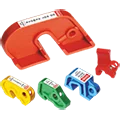
Circuit breakers – MCB, MCCB, ACB. The everyday isolation point. A dedicated circuit breaker lockout device physically traps the toggle or operating handle in the OFF position so it cannot be closed. Different frames need different devices: universal clamp-on MCB lockouts for panel breakers, purpose-shaped MCCB lockouts that engage the moulded case body, and ACB or switchgear lockouts for air circuit breakers in the main board. Fitting the wrong device to the wrong frame is the most common device-selection mistake in data centre LOTO – universal does not mean universal.

UPS systems – the single biggest trap. Putting a UPS on maintenance bypass transfers the critical load to raw mains so a module can be worked on without dropping the load, but maintenance bypass is not lockout. The AC input, AC output, static bypass and most dangerously the DC battery string can all remain energised. DC-link capacitors hold a lethal charge for minutes after AC isolation until bleeder resistors discharge them. A UPS is only safe to work on when every source has been isolated, locked and verified dead, and the capacitive stored energy has been given time to discharge. Follow the manufacturer’s isolation sequence for the specific unit )Vertiv, Schneider Galaxy, Eaton 93PM, ABB Conceptpower, Riello) because the order of operations differs.

Static transfer switches (STS) and automatic transfer switches (ATS). Both have upstream and downstream feeds and can transfer between sources without warning. Isolate every feed; do not rely on the switch position alone.

PDUs, RPPs and rack power. Many rack and cabinet PDUs are cord-and-plug connected – a plug lockout device encloses the plug so it cannot be reinserted. Hard-wired PDUs and remote power panels (RPPs) must be isolated at the upstream breaker with an appropriate breaker lockout.

Battery systems and BESS. Battery strings and battery energy storage systems (BESS) cannot be “switched off” as they are a continuous DC source and must be treated as always live until physically isolated at the battery breaker or disconnect and proven dead. Modern lithium-ion BESS installations add complexity: BMS interlocks and cell-level fuses do not substitute for physical isolation.

Busway and busbar distribution. Overhead busway systems (Starline, Universal Electric, Anord Mardix) need purpose-built tap-off lockouts and busbar shrouding where adjacent sections remain live.

Cooling equipment. CRACs, CRAHs and in-row coolers have their own electrical feeds and are routinely forgotten in an “electrical LOTO” scope. If someone will work in or on the unit, it belongs in the isolation plan.

Browse the range. Explore the electrical lockouts and circuit breaker lockouts at SafetyLock.net – single units through to bulk facility quantities.

Electrical isolation vs lockout tagout: they are not the same thing

The two terms get used interchangeably. An auditor will tell you they are not, and the distinction matters.

Energy isolation is the act of separating equipment from its energy source: opening the disconnecting means, racking out the breaker, removing the plug. The energy isolating device is the physical mechanism that does it – the disconnector, breaker or isolator.

Lockout tagout is what secures and proves that isolated state. Lockout applies the physical lock so the isolating device cannot be returned to ON. Tagout adds the information that who applied it, why, and when. Together with verification (test-before-touch), the three create an electrically safe work condition (ESWC) under NFPA 70E.

A breaker switched to OFF with no lock can be closed by anyone: a contractor restoring power for a different task, an automatic transfer scheme, a colleague who did not know you were behind the panel, a facilities engineer running a remote sequence from a control room. Isolation removes the energy. Lockout keeps it removed. Verification proves the work was done. All three are required, and none of them substitute for the others.

This is also why tagout alone is the weaker option, and OSHA treats it that way. Under 1910.147(c)(3)(ii), if an isolating device is capable of accepting a lock, lockout must be used unless the employer can demonstrate full employee protection equivalent to lockout; a bar rarely met by modern electrical equipment.

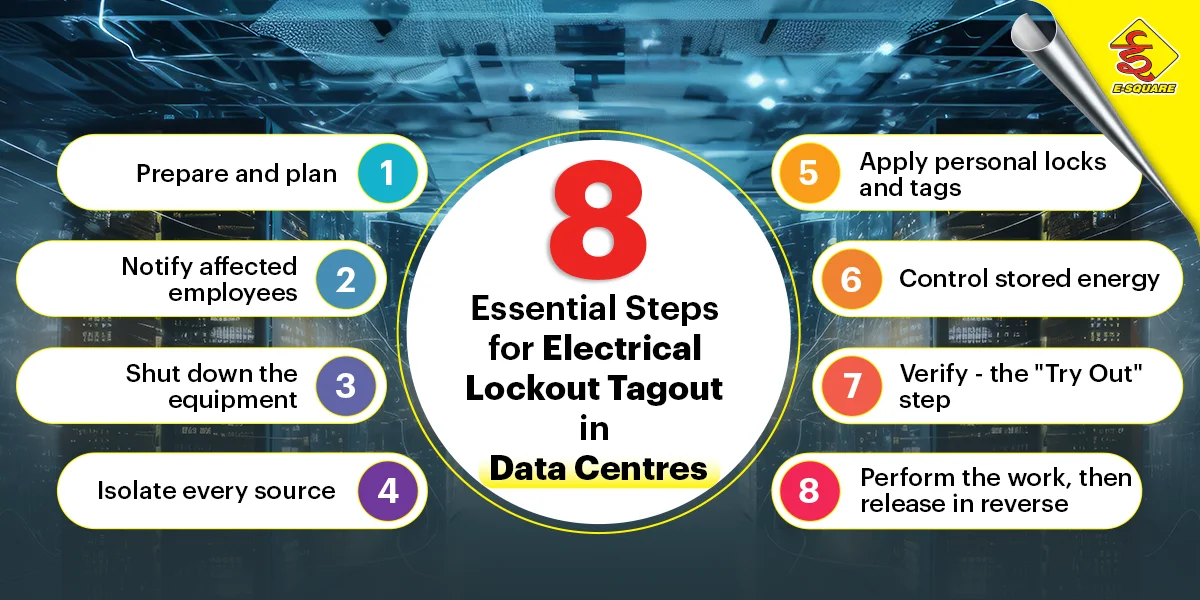
The 8-step electrical LOTO procedure for data centres:

This is the core electrical lockout tagout procedure, written for the authorised employee at the panel. It follows the LOTOTO discipline of Lock Out, Tag Out, Try Out and aligns with the process for establishing an electrically safe work condition in NFPA 70E-2024, Article 120.

lockout tagout procedure eight steps for data centres

  1. Prepare and plan. Pull the equipment-specific procedure, single-line diagram and isolation register. Identify every energy source feeding the equipment, including redundant A/B feeds, static and maintenance bypass paths, control transformers, DC systems and stored energy. If you cannot list every source, stop and get help.
  2. Notify affected employees. Tell anyone who works in the area – operations, security, adjacent contractors, remote monitoring – that an isolation is about to occur. In multi-tenant facilities that includes colocation customers whose equipment sits downstream.
  3. Shut down the equipment. Bring the load to an orderly stop using normal controls. For a UPS, follow the manufacturer’s sequence to transfer load and shut down the module before you isolate anything.
  4. Isolate every source. Operate each disconnecting means to the OFF or open position: main breaker(s), redundant supply breakers, UPS input, output, bypass, battery disconnect, control power. Do not stop at one breaker. Do not rely on remote-operated disconnects and always physically confirm the local position.
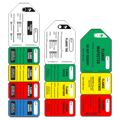
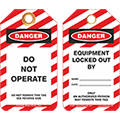
  5. Apply personal locks and tags. Fit a safety padlock through the correct lockout device on each isolating point and use circuit breaker lockout, switchgear lockout, plug lockout. Where several people work under the same isolation, use a group lock box so every authorised employee adds their own personal padlock. Attach a “Do Not Operate” tag with your name, the date, and the reason.
  6. Control stored energy. Allow DC-link and power-factor correction capacitors to discharge, check the manufacturer’s stated discharge time, not your estimate. Confirm battery strings are isolated at the DC breaker. Never assume a capacitor bank is dead just because the AC feed is off.
  7. Verify – the “Try Out” step. Test your voltage tester on a known live source. Test the equipment across all phases and phase-to-earth. Re-test the tester on a known live source to confirm it did not fail during the test. Only an absence-of-voltage confirmation makes the equipment safe to touch. This is the step most often skipped and the step that gets people killed.
  8. Perform the work, then release in reverse. When the work is finished, ensure tools are clear and guards refitted. Each worker removes only their own lock. The area is confirmed clear. Power is restored in a controlled sequence, typically from the source downstream, with abnormal indications checked at each step.

Common failures to avoid: locking out one feed of a dual-corded load, treating maintenance bypass as isolation, removing someone else’s lock (a sackable offence in every facility that takes safety seriously), and re-energising without a walk-around confirmation.

Arc flash: what NFPA 70E-2024 requires of you

You cannot write a serious guide about data centre electrical LOTO without addressing arc flash because the point of LOTO is to get you to zero energy, and the process of getting there is where most arc flash injuries happen.

NFPA 70E-2024 requires an arc flash risk assessment for any task that involves interaction with electrical equipment where an arc flash hazard exists. The assessment establishes the incident energy at the working distance (typically calculated in cal/cm² using IEEE 1584-2018), the arc flash boundary (the distance at which incident energy drops to 1.2 cal/cm² – the onset of second-degree burn), and the PPE category required inside the boundary. Modern switchgear and UPS lineups are usually labelled with the results – if your gear is not, an incident energy analysis is overdue.

In practice, three moments carry the highest arc flash risk during LOTO: racking a breaker in or out of a cell, opening a switchgear cell to work on the busbar, and testing for absence of voltage before it has been proven dead. Each requires full PPE for the calculated category – arc-rated coverall or suit, arc-rated face shield or hood, dielectric gloves rated to the voltage, hearing protection, and dielectric footwear.

The rule that saves lives: treat the equipment as live until you have proved it dead, and dress accordingly for every phase of the isolation. Only after the “Try Out” step is complete does the equipment become an ESWC, and only then do PPE requirements relax.

Multi-employer coordination: contractors, vendor engineers and colocation tenants

Data centres are rarely single-employer sites. A single planned maintenance window can involve facility electricians, UPS vendor engineers, cooling contractors, security integrators and in colocation with customer-side technicians. OSHA 1910.147(f)(2) covers this scenario under “outside personnel (contractors)” and requires the on-site employer and the contract employer to inform each other of their respective LOTO procedures.

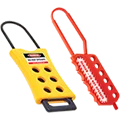
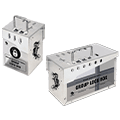
The practical answer is a group LOTO regime built around a group lock box. The primary authorised employee places the isolation locks. Every worker who then enters the area of the isolation adds their own personal padlock to the group box. The box cannot be opened until every worker has removed their lock; which is the mechanism that prevents someone from restoring power while a colleague is still exposed.

For vendor engineers and infrequent visitors, the site’s LOTO procedure must be briefed and documented before work begins. A signed briefing record is an audit expectation, not a nice-to-have.

Choosing the right electrical lockout devices:

The right device is dictated by the isolation point, not by what is cheapest in the catalogue. Match the device to the equipment and you get a fast, repeatable, audit-ready isolation.

Isolation pointRecommended deviceSelection notes
MCB / miniature breakerClamp-on MCB lockoutPin-in/pin-out and universal variants; verify fit against panel type
MCCB / moulded case breakerMCCB lockoutEngages the breaker body; sized to the frame (100 A, 250 A, 630 A, etc.)
ACB / air circuit breakerSwitchgear or breaker lockoutLocks racked-out or OFF position; often brand-specific
Cord-and-plug PDU or equipmentPlug lockout deviceEncloses the plug to prevent reconnection; sized to plug type
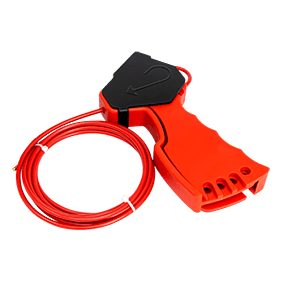
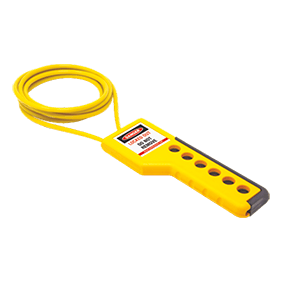
Oversized or awkward isolation pointsCable lockout deviceUniversal – threads through multiple points
Multiple workers, single isolationGroup lock box + safety padlocksOne personal padlock per authorised employee
Wall switch / control switchToggle switch lockoutCover-type or clamp-type
Isolator with locking eyeSafety padlock, directVerify shackle diameter and clearance


electrical lockout tagout kit for data centres

Key buying criteria across the estate:

  • Dielectric (non-conductive) materials – nylon padlock bodies and shackles are the safe default for electrical work.
  • Correct fit to the breaker frame – no adjustable clamp is genuinely universal; walk the panel before ordering.
  • Durable construction – data centre LOTO devices are used and re-used, often by contractors who do not own them.
  • Master-keyed override only where the LOTO programme explicitly authorises it – otherwise you have defeated the point.
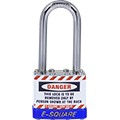
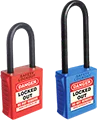
  • Keyed-different, colour-coded safety padlocks – each worker’s padlock is uniquely theirs, and colour separates departments, trades or shifts.
  • Standardisation across the estate – one padlock and hasp family across every site, so any technician can isolate any panel the same way.

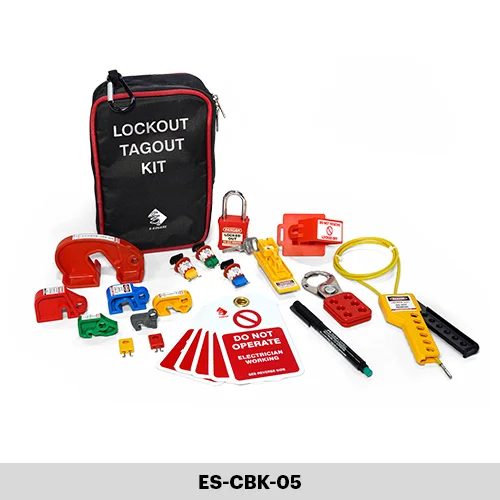
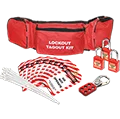
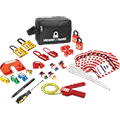
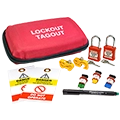
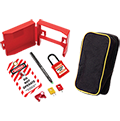
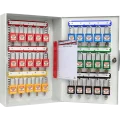
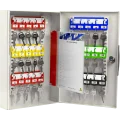
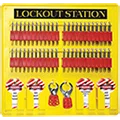
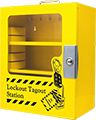
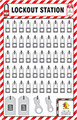
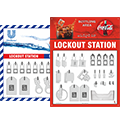
A well-built electrical lockout kit or a LOTOTO kit stocked on a wall-mounted LOTO station in every plant room keeps the right devices where they are needed and makes accountability visible.

Not sure which breaker lockout fits your gear?

Send us your switchgear brand, breaker model and PDU/RPP inventory. E-Square’s electrical specialists will spec an electrical lockout tagout kit matched to your facility. Get free advice.

Resellers, multi-site operators and hyperscalers.

E-Square supplies LOTO devices in bulk with custom kitting, branded packaging and dedicated account management, plus competitive trade pricing for distributors. Whether you need 1 lock or 10,000, talk to our team.

Commissioning and phased energisation: a specialist LOTO problem

Steady-state operations get the attention, but commissioning is where most data centre electrical incidents actually happen. Live and dead equipment sit next to each other for weeks. Contractors move through the space at pace. Isolation boundaries shift daily as more of the facility comes online.

A commissioning LOTO regime has to answer four questions concretely:

  1. What sections are live right now? Marked with physical signage, colour-coded barriers and up-to-date single-line diagrams at each panel.
  2. Where is the isolation boundary between live and dead work? Documented on a commissioning drawing that is updated every shift.
  3. Who has locks on which panels? A live isolation register at the site office, refreshed daily.
  4. What is the permit-to-work regime? Every energised task begins with a permit issued by the responsible engineer, with LOTO applied and verified before the permit is signed off.

A permit-to-work system is not optional at this scale. LOTO gives you the physical control; the permit gives you the administrative control that keeps 30 contractors from tripping over each other.

Compliance and standards: the global picture

Electrical LOTO is governed by overlapping standards. Use the right one for your jurisdiction, then use NFPA 70E or the local equivalent for the actual work practice.

RegionStandardKey requirement
USA – hazardous energyOSHA 29 CFR 1910.147Written energy control programme, machine-specific procedures, annual periodic inspection, training
USA – electrical workOSHA 29 CFR 1910.333(b)De-energise and lock/tag circuits before work on or near exposed parts
USA – work practiceNFPA 70E-2024, Article 120Establish and verify an electrically safe work condition; arc flash risk assessment
UK – statutoryElectricity at Work Regulations 1989 (Regs 12–14)Isolation from every source of supply; prohibition of work on or near live conductors except where unreasonable
UK – practiceBS EN 50110-1; HSE HSG85Safe operation of electrical installations; safe working practice
Australia / NZAS/NZS 4024.1603Risk-assessment-based isolation, isolation register
CanadaCSA Z460-20Hazardous Energy Control Programme with senior-management endorsement; competency-based training
International (machinery)IEC 60204-1:2016 §5.3, §5.5Supply disconnecting device; prevention of unexpected start-up
International (machinery)EN ISO 14118:2018Prevention of unexpected start-up
OH&S managementISO 45001:2018Operational controls for identified hazards, including hazardous energy


A standing rule on product language. E-Square’s devices are designed to support compliance with OSHA 29 CFR 1910.147 and its international equivalents, but no manufacturer’s device is “OSHA compliant” or “OSHA certified” because OSHA does not certify products. Compliance is a property of your programme and your people, not of a padlock.

Regulatory requirements vary by jurisdiction and industry. Always verify current requirements with your local authority or a qualified electrical safety professional.

Periodic inspection, training and documentation:

A defensible LOTO programme is documented, inspected and trained – not just equipped.

Periodic inspections. OSHA 1910.147(c)(6) requires each energy control procedure to be inspected at least annually by an authorised employee other than the one using the procedure, with a written certification (employee name, date, machine ID, inspector name). CSA Z460 requires an equivalent annual review. AS/NZS 4024 expects review on plant modification, after any incident, or at minimum every five years.

Training. Authorised employees (the ones performing LOTO) must be trained on recognition of hazardous energy, energy type and magnitude, and the methods for isolation and verification. Affected employees (working in the area) must be trained on the purpose and use of the procedures. Under CSA Z460, training must be competency-based – workers must demonstrate practical ability, not just attend a course.

Documentation. Every audit will ask for the same artefacts: the written energy control programme, machine-specific procedures for each critical asset, the isolation register, training records, periodic inspection certifications, and for commissioning or contractor work – the permit-to-work records. If these live in three different systems and no one knows where the current version is, the audit is already going badly.

Frequently asked questions:

How do you lock out a circuit breaker in a data centre?

Switch the breaker to OFF, then fit a circuit breaker lockout device that physically traps the toggle or handle in the OFF position. Apply a personal safety padlock through the device and attach a “Do Not Operate” tag with your name, date and reason. Verify absence of voltage across all phases before touching anything. Match the lockout to the breaker type – MCB, MCCB and ACB devices are all different, and universal clamps do not fit every panel.

How do you isolate a UPS for maintenance safely?

Transfer the load via maintenance bypass, then shut down the module using the manufacturer’s sequence. Isolate every source – AC input, AC output, static bypass and the DC battery string and lock and tag each isolating device. Allow DC-link capacitors to discharge for the manufacturer-stated time, then verify absence of voltage. Maintenance bypass keeps the load up but does not make the UPS safe to work on: the battery and capacitors remain lethal until isolated and proven dead.

Which OSHA standard covers data centre lockout tagout?

Two standards apply together. OSHA 29 CFR 1910.147 covers the control of hazardous energy during servicing and maintenance. 29 CFR 1910.333(b), under Subpart S, governs lockout and tagging for work on electrical circuits and equipment. NFPA 70E-2024 provides the consensus work-practice detail, including arc flash risk assessment and the process for establishing an electrically safe work condition.

What is the difference between electrical isolation and lockout tagout?

Isolation is the act of disconnecting equipment from its energy source. Lockout tagout secures that isolated state with a physical padlock and an information tag so it cannot be reversed, and verification proves the equipment is dead. Isolation removes the energy; LOTO keeps it removed and proves it. All three are required to achieve an electrically safe work condition.

Do you need LOTO during data centre commissioning?

Yes, and it is more critical during commissioning than during steady-state operations. Phased energisation means live and dead equipment coexist in the same room for weeks. You must isolate and lock the sections not yet energised, integrate LOTO with a permit-to-work system, keep a live isolation register, and verify absence of voltage before every contact.

What is LOTOTO and how does it differ from LOTO?

LOTOTO stands for Lock Out, Tag Out, Try Out. It adds an explicit verification step of “Try Out” to the traditional lockout/tagout sequence, requiring you to test that the equipment really is de-energised after locking and tagging. In electrical work, “try out” means absence-of-voltage testing across all phases and to earth, with the voltage tester itself proved on a known live source before and after.

When is tagout alone acceptable instead of lockout under OSHA?

Only when the isolating device genuinely cannot accept a lock. OSHA 1910.147(c)(3)(ii) requires lockout whenever the isolating device is capable of being locked out, unless the employer can demonstrate full employee protection equivalent to lockout. In modern data centre gear this is almost never the case as every current-generation switchgear, breaker and disconnector accepts a lock.

Do vendor engineers and contractors need to follow the data centre’s LOTO procedure?

Yes. OSHA 1910.147(f)(2) requires the on-site employer and any contract employer to inform each other of their respective LOTO procedures. In practice the site’s procedure takes precedence, with a documented briefing before work starts. Every worker under the isolation including vendor engineers, adds a personal padlock to the group lock box.

How often do we need to inspect our LOTO procedures?

Under OSHA 1910.147(c)(6), at least annually and the inspection must be performed by an authorised employee other than the one who uses the procedure. The inspection is certified in writing with the employee name, date, machine identification and inspector name. CSA Z460 requires an equivalent annual review; AS/NZS 4024 expects review after plant modification, after any incident, or at minimum every five years.

Conclusion: isolate it, lock it, prove it – every time

Three things to walk away with.

One isolation point is almost never enough. Data centres are built on redundancy. Every isolation plan needs to be built on the assumption that at least one live feed is hiding somewhere upstream behind a static transfer switch, in a maintenance bypass, on the DC side of a UPS, in a battery string.

Isolation is not protection until it is locked, tagged and verified dead. Skipping the “Try Out” step is what kills people. The most experienced engineers on your team do this step every time; the ones to worry about are the ones who do not.

The right device on the right point is the difference between an improvisation and a procedure. Circuit breaker lockouts, switchgear lockouts, plug lockouts, group lock boxes and colour-coded safety padlocks turn a risky task into a fast, repeatable, audit-ready one that stands up to OSHA 1910.147, NFPA 70E-2024, AS/NZS 4024, CSA Z460, EAWR 1989, IEC 60204-1 and ISO 45001 – whichever your auditor arrives with.

Whether you are a colocation tenant setting up your first energy control programme or a hyperscale operator managing tens of thousands of isolation points across a global estate, E-Square has the devices, the kits and the specialists to back you.

Equipping a data centre, contractor fleet or reseller inventory?

Get a bulk quote on electrical lockout kits, circuit breaker and switchgear lockouts, and custom LOTO stations with fast global shipping.

Request a quote.

About the Author

Dr. Nalni Gulati

Co-Founder and Director of E-Square Alliance, she serves LOTO and hazardous energy control in industries across 109 countries. Known as "The LOTO Guru," Dr. Nalni Gulati brings 20+ years of OSHA 29 CFR 1910.147 expertise, founded the Big India LOTO Movement, and authored the Hindi-language LOTO guide, 25 Sabse Aam Janleva Lockout Tagout Galtiyan. She has spoken at FICCI, CII, SAIL, and NSC platforms on industrial safety and hazardous energy management, and leads E-Square's RoSPA-accredited Training Academy.

E-Square Blog: Expert Analysis and Best Practices for Isolation Safety

The E-Square blog features advice, information and support on everything related to Lockout Tagout, including best practices, industry news, latest innovations and regulatory updates.

Address

Contact Us

We reply within 4 IST business hours. No commitment required.


    Worldwide Delivery

    Worldwide Delivery

    Via Fastest Mode Available
    Wide Choice

    Wide Choice

    1800+ Items available
    Customisation Available

    Customisation Available

    No MOQ for standard products
    Direct Technical Support

    Direct Technical Support

    From our expert LOTO Engineers
    Contact<br>us Contact
    us
    Call<br>us Call
    us
    Download<br>catalogue Download
    catalogue
    Become<br>a reseller Become
    a reseller
    Any Questions?
    popup img
    In Lockout Tagout, every detail counts. Let’s discuss yours.

    Hi! I'm Pyush, the Technical Director at E-Square

    Please write to me here if you have any questions or require any kind of assistance. We will get back with an answer ASAP !


      WhatsApp chat icon Chat with LOTO Expert
      Can we help?
      Arrow icon