



















X

Quote Summary

  • You have no products in your cart.

whatsappWhatsapp catalogueDownload Catalogue

LOTO Station vs Shadow Board: Which One Should Your Facility Use?

date

Every year, thousands of workplace injuries - many of them fatal - are caused by the unexpected release of hazardous energy. Lockout Tagout (LOTO) programs exist to prevent exactly this, and at the heart of any well-run LOTO program is one deceptively simple question: where do you keep your lockout devices?

It sounds minor. It isn't.

The way your facility stores and manages LOTO equipment directly affects how quickly workers can access what they need, whether devices are returned after use, and how visible your safety culture is to regulators, auditors, and new employees alike.

Two products dominate this space globally: LOTO stations (including open and enclosed cabinet versions) and shadow boards. Both organise your lockout devices. Both mount to a wall. But they serve different facilities, different teams, and different safety cultures and choosing the wrong one creates friction that quietly undermines your entire LOTO program.

This guide breaks down every meaningful difference between LOTO stations and shadow boards, including a decision matrix, industry-specific recommendations, and answers to the questions safety managers ask us most often, so you can make the right call for your facility.

Whether you're in the US, Australia, UK, Canada, or anywhere else in the world, the principles here apply equally. Let's get into it.

What is a LOTO Station?

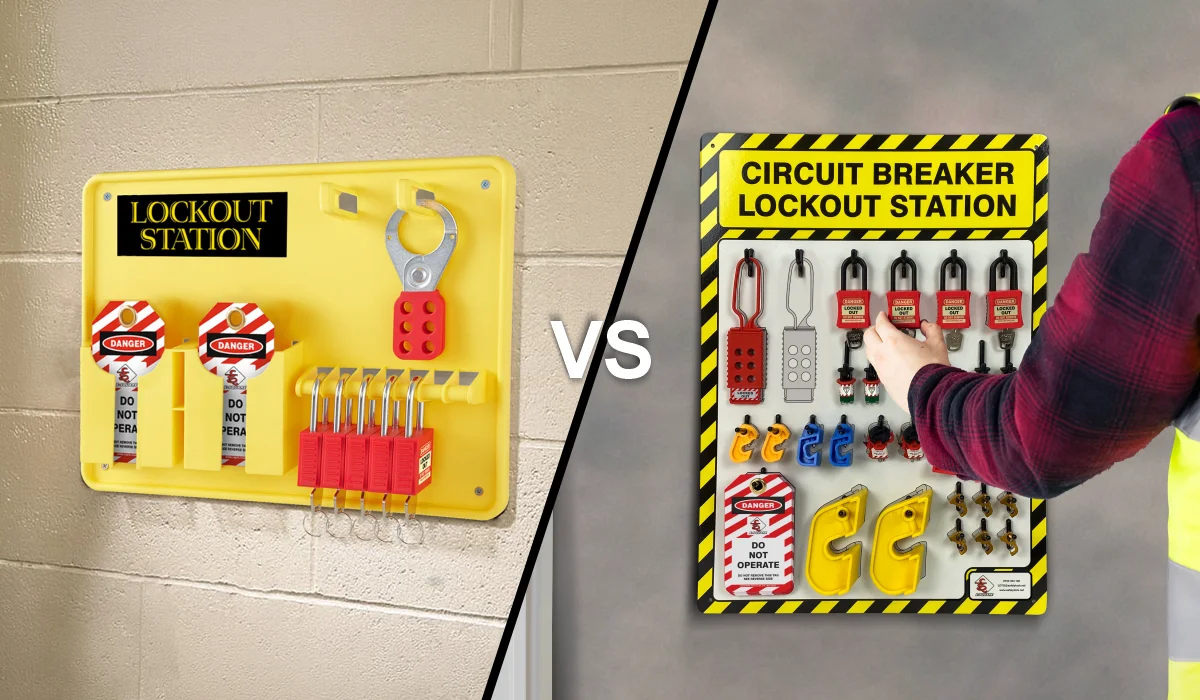
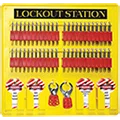
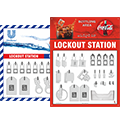
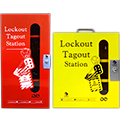
A LOTO station (also called a lockout tagout station or lockout station board) is a wall-mounted storage unit that houses a curated set of lockout devices - padlocks, hasps, tags, valve lockouts, cable lockouts, and more - in a single organised location, accessible to all authorised maintenance and safety personnel.

The core purpose is simple: make sure the right LOTO device is always in the right place when a worker needs it. Instead of technicians rummaging through toolboxes or heading to a storeroom, they walk to the nearest LOTO station, pick up what they need, do the job safely, and return the device when they're done.

LOTO stations come in two primary configurations at Safetylock.net:

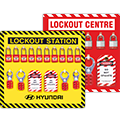
  • Open LOTO Stations - Pegboard or panel-style boards with hooks, clips, and holders where devices hang openly in full view. No door, no cover, immediate grab-and-go access.
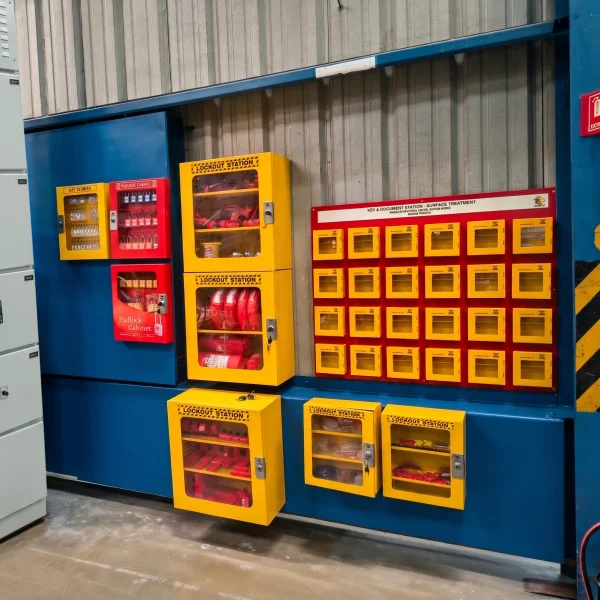
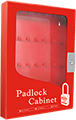
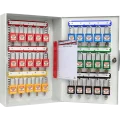
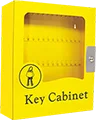
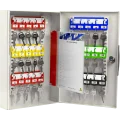
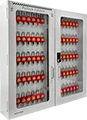
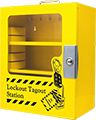
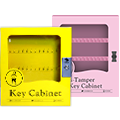
  • Enclosed/Cabinet LOTO Stations - Wall-mounted cabinets with a hinged door or cover, offering protection from dust, moisture, and tampering while keeping devices neatly stored inside.

Both styles are pre-populated or built out with lockout devices chosen for your facility's specific energy hazards - electrical, mechanical, pneumatic, hydraulic, or a combination.

What is a LOTO Shadow Board?

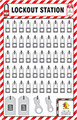
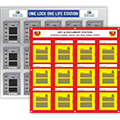
A LOTO shadow board is a specialised type of open lockout station where each device has a designated cut-out silhouette - a "shadow" - marked on the board. Each shadow corresponds precisely to one specific device: its shape, size, and position on the board.

When a device is removed, the shadow is immediately visible. When the device is returned, it snaps back into its shadow. Nothing can be out of place without it being instantly obvious.

This is the defining difference: a standard open LOTO station shows you what's there. A shadow board also shows you what's missing.

Shadow boards are a natural extension of 5S Lean methodology - specifically the Set in Order (Seiton) and Shine (Seiso) principles - and are widely used in manufacturing, automotive, pharmaceutical, and food processing facilities where visual management and process discipline are part of the operational culture.

LOTO Station vs Shadow Board: Key Differences at a Glance

FeatureOpen LOTO StationShadow BoardEnclosed LOTO Station
Immediate device visibilityGoodExcellentRequires opening door
Missing device detectionNot automaticInstant - shadow shows gapNot automatic
Device protection (dust/moisture)ExposedExposedProtected
Access speedFastestFastestSlight delay (door)
Flexibility to add/change devicesHighLow - shadows are fixedHigh
Visual management / 5S alignmentModerateExcellentNot applicable
Best for audit readinessGoodExcellentGood (protected stock)
Suited to harsh environmentsWith caveatsWith caveatsYes
Customisable layoutYesYes (fixed after install)Yes
Typical use caseGeneral maintenance areas5S/Lean facilities, food & pharmaOutdoor, high- dust, high-traffic

Deep Dive: Open LOTO Stations

Open LOTO stations are the workhorse of the LOTO world. They're versatile, scalable, and suitable for the vast majority of industrial facilities.

Browse Open LOTO Stations at SafetyLock.net →

How They Work
Devices are mounted on hooks, clips, or holders on a pegboard or panel. The layout is typically colour-coded or categorised by device type - padlocks on one row, valve

lockouts on another, hasps in the middle. Workers can see at a glance what's available and grab what they need without searching.

Strengths:
Speed and accessibility. There's no door to open, no latch to undo. In a maintenance context, speed matters - and open stations deliver it.

Flexibility. As your facility's equipment changes, so can your lockout station. Add a new lockout device, swap out a hasp for a larger one, reorganise by department or trade - open stations accommodate change easily.

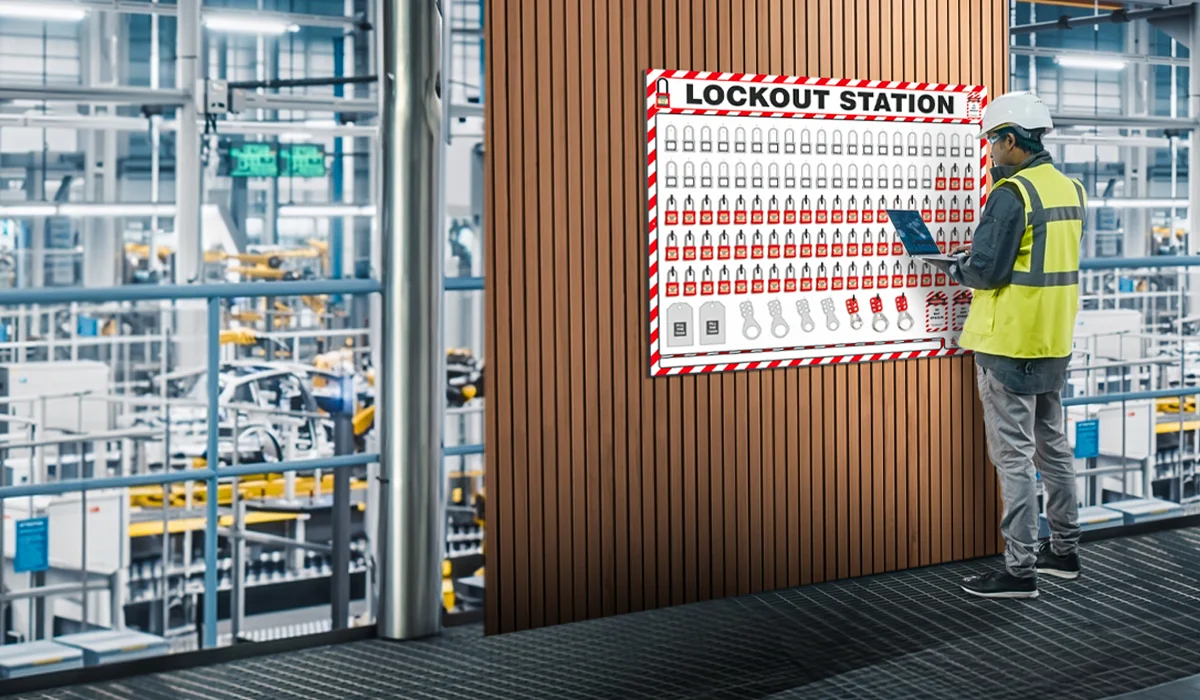
Scalability. Available in small (10–20 devices), medium (30–50 devices), and large (50– 100+ devices) formats. You can deploy one large station per department or multiple smaller stations at machine-specific locations.

Clear inventory at a glance. A well-organised open station lets anyone - worker, supervisor, or auditor - quickly see what devices are on hand.

Limitations:
No automated gap detection. If two padlocks are returned to the wrong hooks, or a hasp isn't returned at all, you won't know unless someone counts. This is manageable with regular audits but requires active management discipline.

Environmental exposure. Dust, oil mist, chemical vapour, or humidity can affect devices over time in some industrial environments. In those cases, an enclosed station may be more appropriate.

Who Uses Open LOTO Stations?
Open LOTO stations are the right choice for most general industry settings: manufacturing plants, chemical processing, utilities, construction sites (with portable variants), mining facilities, and anywhere the device inventory needs to grow or change over time.

Deep Dive: Shadow LOTO Boards

Shadow boards take the visual management concept of a standard open station and push it to its logical maximum. Every device has a home. Every absence is visible.

Nothing is ambiguous.

Browse Shadow LOTO Boards at SafetyLock.net →

How They Work
A shadow board is manufactured with precise cut-out silhouettes (or printed outlines) for each device that will live on it. The silhouettes are typically a contrasting colour to the board background - red or black on white, for example - so that when a device is removed, the outline is immediately obvious from across the room.

Many shadow boards also include labels for each position: the name of the device, its intended use, and sometimes the worker responsible for it.

Strengths:
Instant missing-device detection. This is the shadow board's defining advantage. Walk past the board and you can immediately see whether everything is accounted for without counting, checking a list, or auditing. One glance tells the whole story.

Accountability and discipline. Workers know that an empty shadow will be noticed. This creates a natural return-and-replace culture without requiring enforcement effort from supervisors.

Audit excellence. Safety auditors love shadow boards. A fully stocked shadow board is visible, provable evidence of a well-managed LOTO program. It's hard to argue with a board where every shadow is filled.

5S and Lean alignment. If your facility runs 5S, TPM, or other visual management systems, shadow boards integrate naturally. They embody the "a place for everything and everything in its place" principle better than any other LOTO storage format.

Reduced device loss. Facilities that switch to shadow boards often see a dramatic reduction in lost or misplaced lockout devices - which means less replacement cost and fewer compliance gaps.

Limitations:
Inflexibility. The shadows are fixed by the manufacturer. If you need to add a new device type, change a valve lockout size, or reorganise the board, you typically need a new or modified board. This makes shadow boards less suitable for facilities where device requirements change frequently.

Higher upfront investment. Custom shadow boards are more expensive than standard open stations due to the precision manufacturing involved. However, this cost is usually recovered quickly through reduced device losses and audit-related efficiency.

Requires careful initial specification. You need to know exactly what devices you want on the board before it's made. This makes the design phase more important - but also an opportunity to work with a specialist supplier like E-Square to get it right.

Who Uses Shadow Boards?

Shadow boards are the right choice for facilities with strong visual management cultures: automotive manufacturing, food and beverage processing, pharmaceutical production, clean rooms, and any environment where 5S or Lean is embedded in daily operations. They're also excellent for large facilities with many LOTO-qualified workers, where the accountability function is particularly valuable.

Not sure whether a shadow board or open station is right for your facility?

Our LOTO specialists at SafetyLock.net offer free consultation to help you specify the right solution. Talk to a specialist →

Enclosed LOTO Stations: The Third Option

No comparison of LOTO station types is complete without addressing enclosed stations. These are wall-mounted cabinet units - typically with a hinged door, a locking mechanism, and internal organisation - that protect devices from environmental exposure.

Browse All LOTO Stations at SafetyLock.net →

When Enclosed Stations Make Sense:
Harsh environments. Outdoor installations, foundries, heavy machining areas, facilities with significant airborne contamination (dust, oil mist, chemical fumes) - these environments can degrade or contaminate lockout devices on an open board. An enclosed station keeps devices clean, dry, and functional.

Security requirements. In some facilities, access to LOTO devices needs to be controlled - for example, in a large plant where devices must only be accessible to trained, authorised employees. An enclosed station with a keyed or combination lock limits access while keeping devices organised.

High-traffic, high-dust areas. Shared spaces where the station is exposed to frequent foot traffic, forklifts, or process dust benefit from the protection an enclosed unit provides.

Limitations:
The door introduces a minor delay in access and reduces the visual management benefits of open-style stations. Enclosed stations are not ideal as a primary format where quick access and immediate visibility are the priorities.

The Decision Matrix: Which Station Type is Right for You?

Use this table to guide your selection. If your situation matches multiple rows, prioritise the one that represents your facility's most critical need.

Your SituationRecommended Solution
General maintenance team, mixed equipment typesOpen LOTO Station
5S/Lean facility, strong visual management cultureShadow Board
Automotive or food & beverage manufacturingShadow Board
Outdoor installation, high dust or moistureEnclosed LOTO Station
Frequently changing device requirementsOpen LOTO Station
Need instant missing-device detectionShadow Board
High-security / access-controlled environmentEnclosed Station (lockable)
Large maintenance team (15+ workers)Open or Shadow - larger format
Small facility, straightforward equipmentOpen LOTO Station (small format)
5S facility with high device turnoverOpen Station + shadow board hybrid
Pharmaceutical or cleanroom environmentShadow Board (custom)
Mining or heavy industry siteEnclosed Station or heavy-duty open
Multi-site rollout, consistent visual standardsShadow Boards (custom branded)

Industry-by-Industry Recommendations

Manufacturing & Automotive

Shadow boards are strongly recommended. Automotive plants - particularly those running Toyota Production System or similar Lean frameworks - use shadow boards as a matter of course. The visual management function aligns directly with Kaizen culture, and accountability on the production floor is non-negotiable. Machine- specific LOTO stations (open or shadow) placed directly at each machine's energy isolation point are also valuable.

Food & Beverage / Pharmaceutical:
Shadow boards paired with hygienic-grade lockout devices (nylon or stainless steel, easily sanitised). The clean-as-you-go culture of food processing maps naturally to shadow boards - an unfilled shadow during a sanitation walkdown is immediately flagged. Enclosed stations are an option in areas with washdown protocols that could affect open board-mounted devices.

Oil & Gas / Petrochemical:
Both open stations and enclosed stations are appropriate depending on environmental conditions. ATEX-rated environments may require specially specified boards. Large open stations stocked with a wide variety of valve and cable lockouts are the most common format, placed at major isolation boundaries.

Mining:
Heavy-duty open stations or enclosed stations, depending on site conditions. Portable LOTO kits are also essential for mobile crews working across large sites. Shadow boards can work at fixed maintenance workshops.

Construction:
Portable LOTO kits are the primary format for construction sites; wall-mounted stations suit permanent facilities or long-term project sites. Open stations are most practical given the changing nature of equipment and team composition.

General Industry / Utilities:
Open LOTO stations in small to medium formats, placed at department level or machine level. Enclosed stations where environmental conditions warrant.

What Should Go Into Your LOTO Station or Shadow Board?

Regardless of which format you choose, the contents matter as much as the container. A common question we hear is: "What do I actually put on it?"

The answer depends on your facility's energy sources and isolation points, but a well- stocked general industry station typically includes:

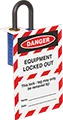
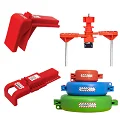
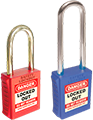
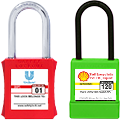
  • Safety padlocks - at minimum 1 per authorised employee, colour-coded by department or trade. Browse safety padlocks →
  • Multi-lock hasps - for group lockout scenarios (6-hole minimum recommended)
  • Valve lockouts - assortment covering your most common valve types (ball, gate, butterfly)
  • Circuit breaker lockouts - matched to your panel brands and breaker sizes
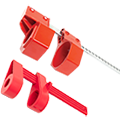
  • Cable lockouts - 1–2 universal cable lockouts for non-standard isolation points
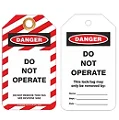
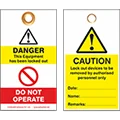
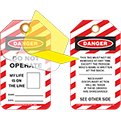
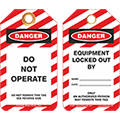
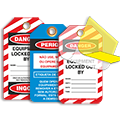
  • LOTO tags - minimum 10, ideally Danger/Do Not Operate Browse LOTO tags →
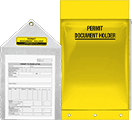
  • Laminated procedure card holder - for displaying the site LOTO procedure at point of use

For shadow boards specifically, you'll also want to define the exact device models and sizes before the board is designed, so each shadow matches the physical footprint of the device precisely.

Need help specifying the right contents for your facility?

SafetyLock.net offers custom station kitting - we'll work with your equipment list and team size to recommend exactly what you need. Start your custom station →

LOTO Stations and Compliance: What the Standards Require

No major LOTO standard - OSHA 1910.147 in the US, AS/NZS 4024.1603 in Australia and New Zealand, BS EN ISO 50110 in the UK and Europe, or CSA Z460 in Canada - mandates a specific storage format for lockout devices. You are not legally required to use a shadow board or a wall-mounted station. However, what every standard does require is that:

  • Lockout devices are durable, standardised, and identifiable (OSHA 147(c) (5))
  • Devices are readily available to authorized employees when needed
  • Devices are maintained in a condition fit for use
  • The employer can demonstrate, during inspections and audits, that devices are properly managed

A well-organised LOTO station or shadow board directly supports compliance with all of these requirements. It makes audits faster, it demonstrates a system rather than ad hoc management, and it shows inspectors that device availability is taken seriously.

Shadow boards specifically can help with the "standardised and identifiable" element - because each device has a fixed, labeled position, it's immediately clear which device type is associated with which isolation point or trade group.

Regulatory requirements vary by jurisdiction and industry. Always verify current requirements with your local authority or a qualified safety professional.

Customisation: Getting a Station That Fits Your Facility

One of E-Square’s most popular offerings is custom-designed LOTO stations and shadow boards. Off-the-shelf stations are excellent for many applications, but facilities with specific needs - unusual device combinations, specific dimensions, corporate branding, multi-language labelling, or site-specific colour coding - benefit significantly from a custom solution.

Custom options available include:

Custom stations are particularly valuable for multi-site rollouts, where a consistent visual standard across all locations strengthens your LOTO program and makes cross- site auditing simpler.

Frequently Asked Questions:

What is the difference between a LOTO station and a shadow board?
A LOTO station is a general term for any wall-mounted storage unit that organises lockout devices. A shadow board is a specific type of open LOTO station where each device has a precisely shaped silhouette cut-out or printed outline on the board, making it instantly visible when a device is missing. All shadow boards are LOTO stations, but not all LOTO stations are shadow boards.

Which is better for 5S compliance - a LOTO station or a shadow board?
Shadow boards are the gold standard for 5S environments. They embody the Set in Order and Shine principles directly - every item has a defined place, and any deviation from that order is immediately visible. Open stations support 5S but don't provide the same level of visual management. If your facility runs 5S, a shadow board is the stronger choice.

How many LOTO devices should a station hold?
This depends on your maintenance team size and the number and type of energy isolation points in your facility. A general rule: the station should hold enough devices so that at peak maintenance demand, no worker has to go to a secondary location to find what they need.

E-Square can help you calculate the right inventory based on your facility profile.
Can I order a LOTO station pre-populated with devices?

Yes. E-Square offers complete kitting - you can order a station with all lockout devices included, ready to mount and use. This is the most convenient option for facilities setting up a new LOTO program or replacing an existing station. Request a quote →

Are shadow boards suitable for outdoor use?
Standard shadow boards are designed for indoor use. For outdoor or harsh-environment applications, enclosed LOTO stations with weather-resistant construction are a better fit. Contact E-Square for guidance on outdoor LOTO storage solutions.

Do I need one central LOTO station or multiple smaller ones?
Both approaches are valid and depend on your facility layout. Large facilities benefit from department-level or machine-level stations that keep devices close to where they're used. Smaller facilities often work well with one central station. A hybrid approach - one main station plus machine-specific mini-stations at critical equipment - is increasingly common in high-risk environments.

Can resellers order LOTO stations in volume with private labelling?
Yes. E-Square offers trade accounts and private labelling options for resellers, distributors, and OHS consultants who supply LOTO solutions to their clients. Enquire about reseller accounts →

What standards govern LOTO station design?
There is no single standard that prescribes exact station design specifications. The governing requirement is that lockout devices must be durable, standardised, and identifiable (OSHA), or fit for purpose and available to workers (AS/NZS, CSA Z460, ISO 50110). Your station or shadow board should support these requirements, and custom-designed solutions from E-Square are built with compliance in mind.

Conclusion: Making the Right Choice

The debate between LOTO stations and shadow boards isn't really a debate - it's a specification question. Both are excellent products. The right one depends on your facility's specific needs.

Here's the short version:

  • Choose an open LOTO station if you need flexibility, fast access, and a scalable solution that can grow and change with your facility.
  • Choose a shadow board if visual management, instant gap detection, and 5S alignment are priorities - especially in manufacturing, food processing, or pharmaceutical environments.
  • Choose an enclosed station if your environment is harsh, outdoor, or requires controlled access to lockout devices.

And remember: the station or board is only part of the picture. What goes inside it - the right mix of padlocks, hasps, valve lockouts, tags, and cable lockouts for your specific energy sources - matters just as much. That's where E-Square’s expertise comes in.

Whether you need a single station for a small facility or a multi-site rollout of custom shadow boards for a global operation, our specialists are ready to help you get it right.

Talk to a LOTO Station Specialist - Tell us about your facility, your team size, and your energy sources, and we'll recommend the right station format and contents for your needs. Free, no-obligation advice.
Get in touch with SafetyLock.net →

Resellers & Distributors - E-Square offers trade pricing, private labelling, and drop-ship options for resellers worldwide.
Apply for a reseller account →

Multi-Site & Enterprise Operations - Managing LOTO compliance across multiple facilities? We supply custom-branded, standardised LOTO stations at scale, with dedicated account support.
Contact our enterprise team →

About the Author

Dr. Nalni Gulati

Co-Founder and Director of E-Square Alliance, she serves LOTO and hazardous energy control in industries across 109 countries. Known as "The LOTO Guru," Dr. Nalni Gulati brings 20+ years of OSHA 29 CFR 1910.147 expertise, founded the Big India LOTO Movement, and authored the Hindi-language LOTO guide, 25 Sabse Aam Janleva Lockout Tagout Galtiyan. She has spoken at FICCI, CII, SAIL, and NSC platforms on industrial safety and hazardous energy management, and leads E-Square's RoSPA-accredited Training Academy.

E-Square Blog: Expert Analysis and Best Practices for Isolation Safety

The E-Square blog features advice, information and support on everything related to Lockout Tagout, including best practices, industry news, latest innovations and regulatory updates.

Address

Contact Us

We reply within 4 IST business hours. No commitment required.


    Worldwide Delivery

    Worldwide Delivery

    Via Fastest Mode Available
    Wide Choice

    Wide Choice

    1800+ Items available
    Customisation Available

    Customisation Available

    No MOQ for standard products
    Direct Technical Support

    Direct Technical Support

    From our expert LOTO Engineers
    Contact<br>us Contact
    us
    Call<br>us Call
    us
    Download<br>catalogue Download
    catalogue
    Become<br>a reseller Become
    a reseller
    Any Questions?
    popup img
    In Lockout Tagout, every detail counts. Let’s discuss yours.

    Hi! I'm Pyush, the Technical Director at E-Square

    Please write to me here if you have any questions or require any kind of assistance. We will get back with an answer ASAP !


      WhatsApp chat icon Chat with LOTO Expert
      Can we help?
      Arrow icon