














X

Quote Summary

  • You have no products in your cart.

whatsappWhatsapp catalogueDownload Catalogue

The Ultimate Guide to Confined Space Lockout Covers: Safety, Compliance & Best Practices

date

Every year, confined space incidents are responsible for a significant portion of workplace injuries and fatalities. These accidents are often preventable with the right safety measures in place. From 2011 to 2019, the U.S. recorded 1,030 confined space fatalities, representing approximately 2% of all workplace deaths. Despite regulatory oversight, unauthorised and accidental entries into confined spaces continue to be among the most persistent and dangerous hazards in industrial settings.

Due to their toxic environments and limited accessibility, confined spaces demand strict safety protocols - from preventing unauthorised access to mandating protective equipment. That’s where confined space lockout covers become indispensable.

These covers physically secure access points and act as visual deterrents, helping organisations comply with safety standards and protect lives.

This guide explores what defines a confined space, why these areas are dangerous, and how .confined space lockout covers are critical for safety and regulatory compliance. Whether you're a safety manager, maintenance supervisor, or EHS professional, this comprehensive guide will help you reduce risk and build a safer work environment.

What is a Confined Space?

According to OSHA’s Permit-Required Confined Spaces (PRCS) Standard, a confined space is:

  • Large enough for a worker to enter and perform assigned tasks;
  • Has limited or restricted means of entry or exit;
  • Not designed for continuous occupancy.

Put simply, a confined space is any partially or fully enclosed space that is not intended for long-term human occupancy and can be accessed only under special conditions - usually for maintenance or inspection. Even large structures like storage tanks or utility vaults qualify if they have limited entry/exit points and hazardous atmospheres.

Examples of Confined Spaces: - Tanks - Silos - Sewers - Pipelines - Utility vaults

Without proper precautions, these environments can lead to serious injury or death.

Why are Confined Spaces Dangerous? Even experienced professionals face immense risks when working in confined spaces. The dangers aren’t always visible - but they are often fatal.

Common Hazards in Confined Spaces

  • Oxygen Deficiency: Poor airflow can lead to asphyxiation.
  • Toxic Atmospheres: Gases or chemical vapors may accumulate, often undetectable without sensors.
  • Flammable Gases: Increased risk of explosions and fire.
  • Engulfment Hazards: Sudden release of liquids or materials can trap or drown workers.
  • Restricted Mobility: Difficult rescue operations due to narrow access.

Regulatory Standards for Confined Spaces

To protect workers, regulatory bodies enforce specific guidelines and requirements.

  • OSHA’s 29 CFR 1910.146: Governs Permit-Required Confined Spaces.
  • OSHA’s 29 CFR 1910.147: Covers Lockout Tagout protocols.

These regulations mandate comprehensive training, hazard assessments, and physical barriers to prevent unauthorised entry.

How to Prepare for Confined Space Entry?

If confined space entry is necessary, it should follow a well-documented and safety-first approach.

Steps for Safe Entry:

  1. Risk Assessment - Identify all potential hazards (toxic gases, mechanical risks, etc.).
  2. Obtain Permits - Secure an authorised entry permit outlining known risks.
  3. Isolate Energy Sources - Use lockout devices to prevent accidental activation of machinery.
  4. Ventilate the Space - Use mechanical ventilation for air circulation.
  5. Wear PPE - Equip workers with appropriate protective gear.
  6. Emergency Plan - Develop a detailed evacuation and rescue procedure.

Confined Space Lockout Covers: The First Line of Defence

Lockout Tagout is a critical safety procedure, and confined space lockout covers are an essential component. They are not just compliance tools - they are lifesaving barriers.

These covers:

  • Secure the entry points physically,
  • Provide visible warning signs,
  • Prevent unauthorised access,
  • Help ensure regulatory compliance.

Why Confined Space Lockout Covers are Essential?

As discussed above, confined spaces pose a serious threat to anyone who enters them without proper protection. That’s why confined space covers play an important role in safety programs.

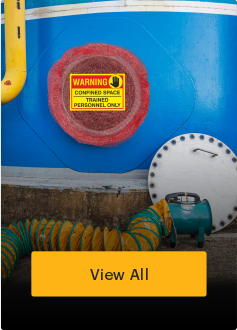
Confined Space Lockout Covers takes a safety-first approach as they provide tamper-resistant covering with bold signage acting as both a physical and visual deterrent. By doing so, they reduce the risk of someone entering an unsafe space and reduce risks like asphyxiation, chemical exposure, or falls.

OSHA levies hefty fines for non-compliance with safety protocols, especially for confined space violations, fines can reach up to $15,625 per violation, with higher amounts for willful or repeated offences. To stay compliant, the administration must have controlled access to confined spaces. Lockout covers are a practical and effective solution for meeting these requirements. These covers not only protect the entry/exit points but also provide warnings about the hazardous nature of confined spaces.

Confined space lockouts are not only important to protect workers and stay in compliance, but it is also needed to protect equipment and infrastructure. These spaces, when left uncovered, can be entry points for rain or snow, dust, rodents, debris, and more, leading to blockage or contamination, which can lead to costly repairs.

Investing in confined space lockout covers is a small cost compared to the financial and reputational fallout from a preventable accident.

Let’s take a look at the importance of confined spaces through an example -

Fatal Entry at a Paper Mill Due to Lack of Confined Space Lockout Cover

In 2007, a maintenance contractor at a paper mill in Alabama entered a large pulping tank to perform what was believed to be a routine inspection. There were no visible signs or barriers - no lockout cover, signage, or physical deterrent to indicate the space was hazardous. Believing it was safe, the worker climbed inside.

Unbeknownst to him, the tank still contained oxygen-displacing gases and had not been ventilated or tested for atmospheric safety. Within minutes, he lost consciousness due to asphyxiation and was later found deceased inside the tank.

Top Benefits of Using Confined Space Lockout Covers:

Here are some key advantages of using confined space lockout covers:

  1. Enhanced Safety

The primary and most important benefit of confined space covers is the safety of workers, nearby people or unaware individuals. By physically locking the access points, lockout covers help prevent accidental entries into hazardous spaces. A properly locked and tagged confined space can save lives and reduce injury rates.

  1. Regulatory Compliance

National and International regulatory bodies such as OSHA, ANSI and many others have strict guidelines for confined space entry and safety. Lockout covers help you comply with these regulations and avoid fines and legal problems.

  1. Standardised Safety Measures

When confined spaces are covered without access in all hazardous entry points, it creates a uniformity which is especially beneficial in larger plants. It helps to reduce confusion and ensure that all employees know safety procedures.

  1. Prevention of Unauthorised Entry

With a physical and visual lockout at confined space entry points, it stops unwanted workers, people and rodents from entering. It ensures only employees with an authorised work permit enter the space, reducing the risk of injury and incident.

  1. Improved Workplace Efficiency

Lockout covers improve productivity and efficiency by reducing confusion and preventing downtime due to accidents. It helps workers to quickly identify which areas are off-limits and which are okay to enter.

Types of Confined Space Lockout Covers:

Different confined spaces require different types of covers based on shape, size, and location. Let’s take a look at E-Square’s various types of confined space lockout covers and where they should be used.

  1. Lockable Solid Confined Space Covers

Purpose: Lockable Solid Confined Space Covers provide a rigid, tamper-resistant barrier for maximum protection and compliance.

  • Built from high-durability materials for harsh environments.
  • Accommodates multiple personal padlocks for a secure lockout.
  • Complies with OSHA standards.
  1. Lockable Ventilated Confined Space Covers

Purpose: Lockable Ventilated Confined Space Covers are ideal for environments requiring both safety and airflow, such as tanks with noxious gases.

  • Lockable, mesh-reinforced polyester for ventilation and visibility.
  • Padlock-compatible for multi-user lockout.
  • Complies with OSHA standards.
  1. Elastic Non-Lockable Ventilated Covers

Purpose: Quick and flexible protection for everyday use or short maintenance intervals.

  • Elastic slip-on design for fast installation and removal.
  • Durable perforated polyester mesh allows airflow and visibility.
  • Ideal for high-traffic and turnaround applications.
  1. Velcro Confined Space Covers

Purpose: Velcro Confined Space Covers are designed for vessel skirts, tower skirts, and irregular surfaces where traditional covers won’t fit.

  • Made from ventilated, reinforced red polyester mesh.
  • Hook-and-loop Velcro strap system for adjustable fit.
  • Available in square and rectangular formats.
  • Optional adhesive backing available.
  1. Magnetic Confined Space Covers

Purpose: Quick, secure protection for metallic entry points - ideal for ships, barges, nozzles, and hinged access points.

  • Made from red polyester mesh with built-in industrial magnets.
  • Suitable for irregular and non-flanged entries.
  • Durable and designed for long-term outdoor exposure.
  1. Lockable Ratchet Strap Tower Skirt Covers

Purpose: Heavy-duty protection for column skirts and tower bases with large or complex geometries.

  • Includes nylon ratchet straps for custom cinching.
  • Heavy PVC-coated polyester construction for outdoor exposure.
  • Each unit includes two industrial ratchet straps and one cover.
  1. Sign-O-Flexi Barrier

Purpose: Lightweight and economical visual deterrent for confined spaces.

  • Made from durable polycarbonate plastic.
  • Elastic cords secure the barrier to entry points.
  • Available in A3 and A2 sign sizes.
  1. Sign-O-Barrier SS (Steel Barrier)

Purpose: Permanent or semi-permanent protection using heavy-duty stainless steel.

  • Constructed from 1.2 mm stainless steel.
  • Comes with scissor-like locking arms and mounting hardware.
  • Lockable versions available with cable system (ES-SMCL).
  • Available for 20” and 40” openings.
  1. Sign-O-Skirt Barriers (Plus Type & Pole Type)

Purpose: Modular barriers for large or irregular confined space openings.

  • Made from robust stainless steel with powder coating.
  • Includes slip-resistant diamond plate and OSHA-compliant signage.
  • Available in Plus (crossbar) and Pole configurations.
  1. Confined Space Manhole Signs

Purpose: Budget-friendly signage solution for visible hazard communication.

  • Lightweight poly signage with bold warnings.
  • Optional material: Aluminium or Steel for rugged outdoor use.
  • Easy to apply and remove for temporary usage.
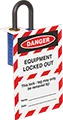
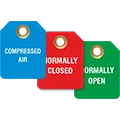
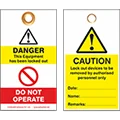
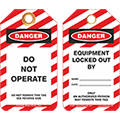
  1. Confined Space Tags

Purpose: Warn personnel and mark confined space statuses.

  • Tear-resistant 0.7 mm semi-rigid plastic.
  • Double-sided printing for visibility.
  • Available in OSHA-compliant warning and checklist formats.
  • Size: 143 x 80 mm

How to Choose the Right Lockout Cover?

Selecting the right confined space cover for your specific needs is important for maintaining a successful safety protocol. Whether it’s for a temporary maintenance or long-term cover, the cover must be durable and should clearly communicate hazards.

Here are a few points you should keep in mind while selecting lockout covers.

  1. Size - The size of the cover should match the entry/ exit point. A bigger or smaller size will not fit the space well and can lead to failed lockout.
  1. Shape - Although most confined space entry points may be circular, all confined spaces openings will not be same or uniform. You must select a shape appropriate cover.
  1. Lockability - To stay compliant with regulations, the lockout cover must support a padlock to prevent tampering.
  1. Material - High quality lockout covers are imperative a successful lockout. The material must be durable, visible and according to industry specific needs must be mesh for ventilation.
  1. Customised - Safety experts like E-Square provide customised safety solutions which suits your plant’s individual need, which ensure compliance and maximum safety.

Installation Best Practices for Confined Space Lockout Covers:

Proper installation of confined space covers is important for a successful lockout. Follow these steps for properly and successfully install lockout covers.

  1. Preparation - Before installing the cover, assess the confined area for potential hazards and atmospheric toxicity. Also ensure the space does not have any workers or tools.
  2. Selection - According to the specific hazardous confined space need, find the ideal cover.
  3. Installation - Position the lockout cover over the opening and use the system (ratchet strap, velcro, elastic) to secure the cover tightly in place.
  4. Padlock - Use durable padlocks to secure the cover in place and prevent unauthorised access.
  5. Warning Sign - Make sure a relevant, highly visible and durable warning sign is there on the cover.

Common Mistakes to Avoid

  • Using caution tape instead of a physical lockout cover.
  • Failing to use padlocks, risking unauthorised access
  • Installing the wrong size or type of cover.
  • Skipping installation preparation.
  • Ignoring routine inspections and maintenance.

Conclusion: Protect Lives, Ensure Compliance

Confined space lockout covers are a non-negotiable element of any workplace safety strategy. They save lives, reduce liability, and ensure uninterrupted operations.

When it comes to dependable and compliant safety solutions, E-Square stands as your No.1 trusted partner. With a comprehensive range of high-quality safety products including confined space lockout covers, we ensure that your plant has all the right tools to safeguard your workers.

Integrating robust safety protocols today can minimise risks and maintain productivity. Contact us, and our experts will help you develop a detailed safety program for your plant’s needs.

About the Author

Esquare

A team of safety professionals and educators united to enhance workplace safety with essential Lockout Tagout knowledge. We offer expertise to foster safety compliance and effective LOTO protocols across industries.

E-Square Blog: Expert Analysis and Best Practices for Isolation Safety

The E-Square blog features advice, information and support on everything related to Lockout Tagout, including best practices, industry news, latest innovations and regulatory updates.

Address

Contact Us


    Worldwide Delivery

    Worldwide Delivery

    Via Fastest Mode Available
    Wide Choice

    Wide Choice

    1600+ Items available
    Customisation Available

    Customisation Available

    No MOQ for standard products
    Direct Technical Support

    Direct Technical Support

    From our expert LOTO Engineers
    Contact<br>us Contact
    us
    Call<br>us Call
    us
    Download<br>catalogue Download
    catalogue
    Become<br>a reseller Become
    a reseller
    Any Questions?
    img
    In Lockout Tagout, every detail counts. Let’s discuss yours.

    Hi! I'm Pyush, the Technical Director at E-Square

    Please write to me here if you have any questions or require any kind of assistance. We will get back with an answer ASAP !