









































X

Quote Summary

  • You have no products in your cart.

whatsappWhatsapp catalogueDownload Catalogue

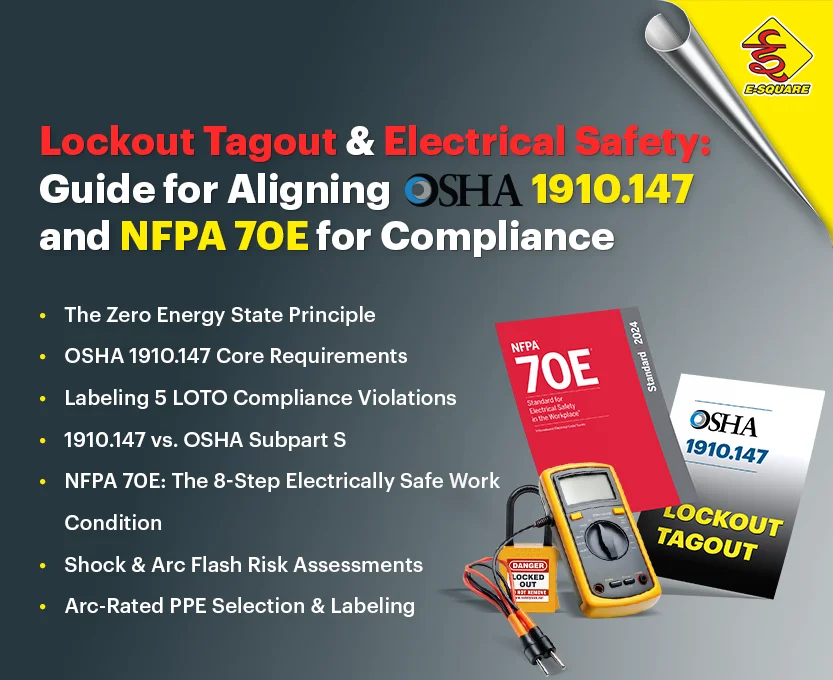
Lockout Tagout & Electrical Safety: Guide to OSHA 1910.147 and NFPA 70E Compliance

date

Every year, workers are seriously injured or killed during maintenance, servicing, and repair activities that should have been routine. The common thread? Equipment that was never fully isolated. Energy sources that were assumed to be "off." Verification steps that were skipped. It is a pattern so persistent that Lockout Tagout (LOTO) has ranked inside OSHA's Top 10 most-cited violations year after year, landing at number four in 2025.

At E-Square Alliance, we see the same story play out in plants across India and worldwide: the intent to comply is there, but the framework connecting OSHA 1910.147, OSHA Subpart S (Electrical Safety), and NFPA 70E is often misunderstood. Three standards, three purposes - and together, they form the backbone of every mature industrial safety programme.

This guide decodes how these standards interlock, what a compliant LOTO procedure actually looks like, and what it takes to put electrical equipment into an Electrically Safe Work Condition before a single tool is ever picked up.

Why Lockout Tagout Exists: The Principle of Zero Energy State

Lockout Tagout is not about paperwork. It is about one non-negotiable outcome: bringing equipment into a zero energy state and locking all energy sources into an isolated position so maintenance work can be performed without exposing a worker to stored, residual, or reintroduced energy.

That zero energy state is the moment where risk collapses to zero. Everything else - written programs, periodic inspections, device control, training tiers - exists to reliably reproduce that moment, every shift, every machine, every time.

OSHA 1910.147: What the Law Actually Requires

OSHA 1910.147 - "The Control of Hazardous Energy" - is the foundational lockout tagout standard. Globally, it sets the benchmark that Indian multinational manufacturers, exporters, and EHS-mature organizations adopt as best practice.

Compliance with 1910.147 rests on four pillars:

  1. A site-specific written program. Not a generic template. The program is the roadmap: where procedures live, how authorized employees access them, the template structure, how lockout devices are assigned, and how periodic inspections are run and documented.
  2. Equipment-specific procedures. Every machine that requires lockout needs its own procedure tied to its specific energy sources, isolation points, and shutdown-restore sequence.
  3. Periodic inspections. Procedures must be inspected at least annually, with a demonstration by an authorized employee that they can correctly execute the lockout. For a plant with hundreds or thousands of pieces of equipment, this becomes a documentation-heavy exercise and a top source of compliance failure.
  4. Tiered training. Authorized, affected, and other employees each have defined training obligations. Skipping the tier distinction is one of the fastest routes to a citation.

The Most Common 1910.147 Violations - and Why They Keep Happening

When inspectors issue citations under 1910.147, the breakdown is remarkably consistent:

  • Missing or incomplete procedures - the #1 cited violation. Plants with large equipment inventories simply never caught up.
  • Training and communication failures - affected employees weren't notified; authorized employees weren't recertified.
  • Periodic inspection lapses - procedures exist but haven't been demonstrated or reviewed.
  • No written program - the fourth most-cited issue.
  • Incomplete procedure elements - procedures exist but lack one or more OSHA-required components.

What a Compliant LOTO Procedure Must Contain?

An OSHA-compliant lockout tagout procedure is site and equipment-specific and must include:

  • Facility name, location, and equipment identification
  • All energy sources and their magnitudes
  • Location of isolation points and the methods/devices required to isolate them
  • Purpose, scope, and enforcement of the procedure
  • Step-by-step shutdown and restoration sequence
  • A verification step confirming de-energization

That last element - verification - is the most frequently missing and the most dangerous gap. De-energizing is not the same as proving de-energization. Until you have actively verified zero energy, you must assume the equipment is live.

Does Every Machine Need a Written Procedure?

A written procedure is not required only when all of the following are true:

  • The equipment has a single energy source that can be completely isolated.
  • There is no potential for stored or residual energy after shutdown.
  • The lockout device remains under the exclusive control of the employee performing the work.
  • No other hazards are created by the lockout.

If any of these fail, a written, equipment-specific procedure is mandatory. In practice, this captures virtually every piece of production machinery, HVAC equipment, boilers, chillers, compressors, and fans found in an industrial facility.

Understanding Energy Sources: More Than Just Electricity

Lockout Tagout is multi-hazard engineering. The energy sources you must isolate typically include:

  • Mechanical / fluid & gas systems - valves controlling hydraulics, pneumatics, steam, and process chemicals.
  • Kinetic and stored energy - the silent killers: gravitational loads, springs under tension, flywheels, accumulators.
  • Electrical energy - by far the most common source on any procedure, and almost always the first step in a lockout sequence. Killing power to the machine and its controls comes before any valve is closed or bleed line is opened.

This is where LOTO and electrical safety stop being separate conversations.

The Critical Boundary: 1910.147 vs. OSHA Subpart S

Here is a distinction that trips up even experienced safety teams: OSHA 1910.147 does not cover electrical hazards from work on, near, or with conductors or equipment in electrical utilization installations. That domain belongs to OSHA Subpart S.

The boundary is clean once you see it:

  • Use Lockout Tagout (1910.147) when you are killing power to perform mechanical work on the equipment (changing a belt, replacing a bearing, cleaning a guard).
  • Use Subpart S when you are a qualified electrical worker performing electrical work - troubleshooting a control panel, testing for voltage, replacing a contactor.

OSHA applies the most stringent electrical protocols to anyone actually working with live or potentially live electrical parts.

Subpart S at a Glance

StandardWhat it Covers
1910.331Defines qualified vs. unqualified persons
1910.332Training standards - qualified workers must identify exposed live parts and understand nominal voltage, clearing distances, and corresponding voltages
1910.333Separation of energized and de-energized parts; mandates LOTO where de-energization is feasible; allows voltage testing to verify
1910.335PPE requirements - who wears it, when, and what types


Notice those bolded terms in 1910.332 - nominal voltage, clearing distances, corresponding voltages. These are not random. They are exactly the data points printed on an arc flash warning label. OSHA is quietly telling you that qualified workers must be able to read and act on that label. Which brings us to NFPA.

NFPA 70, 70E, and 70B: The "How" Behind OSHA's "What"

OSHA tells you what must be done. NFPA tells you how to do it. When OSHA cites a company for non-compliance under Subpart S, it very often points directly to NFPA 70E to explain why.

Three NFPA standards work together across the life of electrical equipment:

  • NFPA 70 - National Electrical Code (NEC). How to install electrical systems safely. Not a maintenance standard. Not a safety standard.
  • NFPA 70E - Standard for Electrical Safety in the Workplace. How to work on electrical equipment safely once installed. The cornerstone for electrically safe work conditions, PPE selection, and live-work protocols.
  • NFPA 70B - Recommended Practice for Electrical Equipment Maintenance. How to maintain electrical equipment properly - your preventive maintenance schedule.

For safety professionals, NFPA 70E Chapter 1 is the operational heart of Subpart S compliance.

NFPA 70E Chapter 1: The Core Safety Framework

NFPA 70E Chapter 1 is split into five articles. Two drive practical compliance:

  • Article 110 - General Requirements. Establishes that hazard elimination must be the first priority for any safety-related work practice. You don't start with PPE. You start by asking whether the hazard can be eliminated altogether through de-energization.
  • Article 120 - Establishing an Electrically Safe Work Condition. Defines an 8-step process. Article 110.2 makes it explicit: until all eight steps are completed, the equipment is not in an electrically safe work condition. The hazard is still present.

When is an Electrically Safe Work Condition Required?

Two triggers:

  1. When a worker will enter the restricted approach boundary - for most equipment operating at 50–480 V, this is 12 inches (305 mm) from an exposed energized part.
  2. When the worker will interact with the equipment in a way that creates an increased risk of arc flash (see NFPA 70E Table 130.5(C) for the task list).

The 8-Step Process for Establishing an Electrically Safe Work Condition

  1. Determine all possible sources of electrical supply to the equipment.
  2. Shut down the equipment and open the disconnecting device for each source.
  3. Visually verify all blades of the disconnects are fully open, or draw-out breakers are fully withdrawn (Lexan viewing windows help here).
  4. Release all stored electrical energy - capacitors, batteries, UPS backups.
  5. Block or release stored non-electrical energy that could re-energize the circuit (for example, fluid in piping spinning a pump motor into a generator).
  6. Apply the lockout tagout device per the documented procedure.
  7. Test to verify the absence of voltage using properly rated test equipment - the test-test-test or live-dead-live method.
  8. Temporarily ground the equipment if induced voltages or stored energy remain a possibility.

A critical point: Steps 7 and 8 are themselves considered energized work. The worker must be qualified, must wear electrical PPE, and must follow all energized-work protocols until voltage absence is confirmed.

Voltage Verification Done Right (Step 7 in Depth)

This is where programs most often fail silently - the meter reads zero, the worker proceeds, and nobody realises the meter itself was faulty.

The correct protocol:

  1. Visually inspect the test equipment; confirm it is adequately rated and in good condition.
  2. Verify the meter works by testing it on a known live source.
  3. Test the circuit - phase-to-phase and phase-to-ground - at each point of work.
  4. Re-test the meter on the known source to confirm it still functions.
  5. If absence of voltage is confirmed across all tests, proceed.

Tick tracers and non-contact proximity sensors are for troubleshooting only. They are not acceptable for NFPA 70E Step 7 verification. Use a rated contact voltmeter.

The Simple Lockout Tagout Exception:

Article 120.5 recognizes a narrower class of work: one qualified person, de-energizing one set of conductors, solely for the purpose of safeguarding against electrical hazards. This is a "simple lockout tagout," and it does not require a written procedure for each application.

This is why procedures are typically written at the machine level - not for every individual disconnect or control panel.

When You Can't De-Energize: Justifications for Energized Work

NFPA 70E Article 110.2 - echoed by OSHA - recognizes that de-energization is not always possible. Energized work is permitted only under one of three justifications:

  1. De-energizing would introduce an additional or increased hazard - life safety systems, ventilation for confined spaces, emergency alarms.
  2. De-energization is infeasible due to equipment design, operational limitations, or the task itself - diagnostics, troubleshooting, commissioning, and testing typically fall here.
  3. The equipment operates at less than 50 V AC or DC - where shock and arc flash hazards fall below regulatory thresholds.

Outside these three justifications, energized work is not permitted. Period.

Article 130: Working Inside the Hazard

When energized work is justified - or when you are in the process of establishing the electrically safe work condition - NFPA 70E Article 130 governs the work.

Key requirements:

  • Only qualified persons may perform work involving electrical hazards.
  • An Energized Electrical Work Permit (EEWP) is required whenever a worker enters the limited approach boundary or interacts with equipment in a way that could cause an arc. Four exemptions apply - the most common being testing, troubleshooting, and voltage measurement.
  • A Shock Risk Assessment and an Arc Flash Risk Assessment must be completed and available on site.

Shock & Arc Flash Risk Assessments

Electrical hazards come in two independent flavours, and each requires its own assessment:

Shock Risk Assessment identifies:

  • The voltage at the point of work
  • The limited approach boundary (unqualified person boundary)
  • The restricted approach boundary (where qualified persons must use shock PPE)
  • The class of rubber insulating gloves required (e.g., 208 V equipment typically requires Class 00 gloves)

Arc Flash Risk Assessment identifies:
The arc flash hazard and incident energy

  • The arc flash boundary
  • The incident energy rating (in cal/cm²) that drives PPE selection

Arc flash assessments must be reviewed for accuracy at intervals not exceeding five years, and earlier if there are significant changes - new equipment, utility fault-current updates, transformer upgrades, or modifications to the distribution system.

Electrical PPE: Matching the Hazard, Not Guessing

PPE is selected from the assessment - not from the storeroom shelf.

Arc Flash PPE - shirt, pants, hood, face shield, balaclava - must be rated at or above the equipment's incident energy rating. If the label reads 4.39 cal/cm², every layer must meet or exceed that value.

Shock Protection PPE - rubber insulating gloves with leather protectors, rated by voltage class (Class 00, 0, 1, 2, 3, 4).

Arc Flash Labels are the worker's on-demand decision aid. Mounted on the outside of the equipment, they display exactly the data OSHA 1910.332 requires qualified workers to understand - exposed live parts, nominal voltage, clearing distances, incident energy, and required PPE. A qualified worker should be able to look at the label and know precisely what to wear before opening the cabinet.

Tying It All Together

StandardRoleStatus
OSHA 1910.147Lockout Tagout requirements during servicing and maintenanceLaw
OSHA Subpart SSafe electrical work practices, training, and PPELaw
NFPA 70EHow to establish an electrically safe work condition, labelling, PPE selection for live workConsensus standard - referenced by OSHA for compliance


OSHA gives you the obligation. NFPA 70E gives you the method. Lockout Tagout is how you eliminate the hazard where possible - and where it is not possible, 70E tells you how to work safely anyway.

How E-Square Alliance Helps Indian Industry Close the Gap?

For more than two decades, E-Square Alliance has been India's trusted partner in Lockout Tagout, and energy isolation. We help manufacturers, refineries, power plants, pharmaceutical facilities, and process industries move from compliance on paper to compliance on the shop floor.

Some of our end-to-end capabilities include:

  • Equipment-specific LOTO procedure development - site-walked, photographed, and OSHA 1910.147-compliant, covering every required element including the verification step.
  • Energy isolation and safety training - tiered programs for authorized employees, affected employees, and qualified electrical workers.
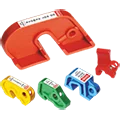
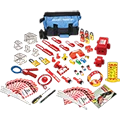
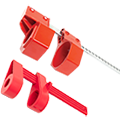
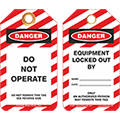
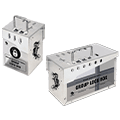
  • The widest range of LOTO devices - valve lockouts, electrical lockouts, cable lockouts, circuit breaker lockouts, group lock boxes, tags, and customised kits engineered for Indian industrial conditions.

Every program we deliver is built around a simple belief: a LOTO system only works if the people on the shop floor can execute it flawlessly on their worst day.

The Bottom Line:

Lockout Tagout and electrical safety are not competing disciplines - they are the same discipline viewed from two angles. OSHA 1910.147 governs how you isolate energy for mechanical work. OSHA Subpart S governs how you work with electricity itself. NFPA 70E ties the two together with the methodology, the boundaries, and the PPE logic.

The difference between a workforce that goes home safe and one that doesn't often come down to three things: complete procedures, verified de-energization, and PPE chosen from an assessment rather than from habit.

Get those right, and the rest of your safety programme has a foundation to stand on.

Ready to Strengthen Your Lockout Tagout and Electrical Safety Programme?

If your facility is preparing for an audit, rolling out new equipment, or simply wants a second pair of expert eyes on your energy control programme, E-Square Alliance can help. Our specialists have walked thousands of production lines, written compliant procedures for some of India's most complex plants, and trained the workforces that execute them.

Talk to an E-Square Alliance safety specialist today and build a LOTO and energy isolation safety programme your team can trust, and your auditors can sign off on.

About the Author

Esquare

A team of safety professionals and educators united to enhance workplace safety with essential Lockout Tagout knowledge. We offer expertise to foster safety compliance and effective LOTO protocols across industries.

E-Square Blog: Expert Analysis and Best Practices for Isolation Safety

The E-Square blog features advice, information and support on everything related to Lockout Tagout, including best practices, industry news, latest innovations and regulatory updates.

Address

Contact Us


    Worldwide Delivery

    Worldwide Delivery

    Via Fastest Mode Available
    Wide Choice

    Wide Choice

    1800+ Items available
    Customisation Available

    Customisation Available

    No MOQ for standard products
    Direct Technical Support

    Direct Technical Support

    From our expert LOTO Engineers
    Contact<br>us Contact
    us
    Call<br>us Call
    us
    Download<br>catalogue Download
    catalogue
    Become<br>a reseller Become
    a reseller
    Any Questions?
    img
    In Lockout Tagout, every detail counts. Let’s discuss yours.

    Hi! I'm Pyush, the Technical Director at E-Square

    Please write to me here if you have any questions or require any kind of assistance. We will get back with an answer ASAP !


      Can we help?